Designing a spacious villa requires precise spatial planning to ensure movement remains unobstructed and comfortable. Homeowners comparing expansive layouts must prioritize proper clearances between seating areas, architectural features, and heavy materials like marble tables or solid oak cabinets. Sourcing high-quality pieces from a brand like Modenese Furniture provides excellent luxury furniture category depth, but even premium items require correct spacing to function properly. Maintaining a primary walkway of 30 to 36 inches prevents physical congestion and preserves the visual scale of large rooms.
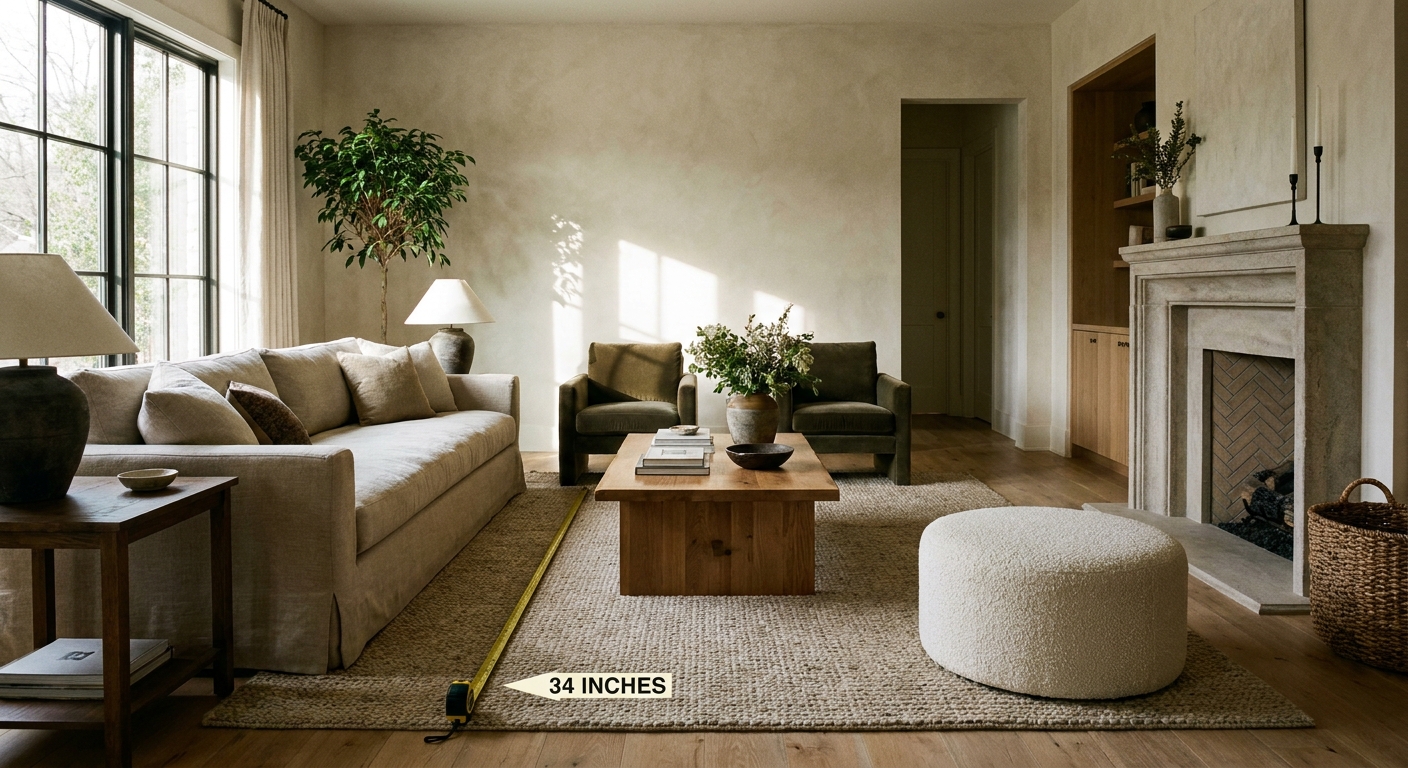
How 30 to 36 inch circulation paths define luxury living room plans
Establishing a 30 to 36 inch circulation path defines luxury living room plans by guaranteeing residents can navigate around large seating arrangements without altering their natural walking stride, which ultimately separates high-traffic corridors from intimate conversation zones and ensures heavy materials never obstruct daily movement. Professional interior designers enforce strict spatial boundaries to keep active pathways distinct from quiet relaxation areas.
Architectural standards for residential clearances
The United States Access Board specifies that accessible interior routes require a minimum clear width of 36 inches to accommodate mobility devices and standard foot traffic. Applying ADA compliance principles to residential architecture ensures that expansive living rooms remain fully navigable for all guests. Designers frequently reference the Access Board Chapter 4 guidelines when plotting primary walkways between entry doors and patio exits. Maintaining a continuous 36-inch path prevents physical bottlenecks near structural columns or built-in shelving units.
Material specifications and furniture scale
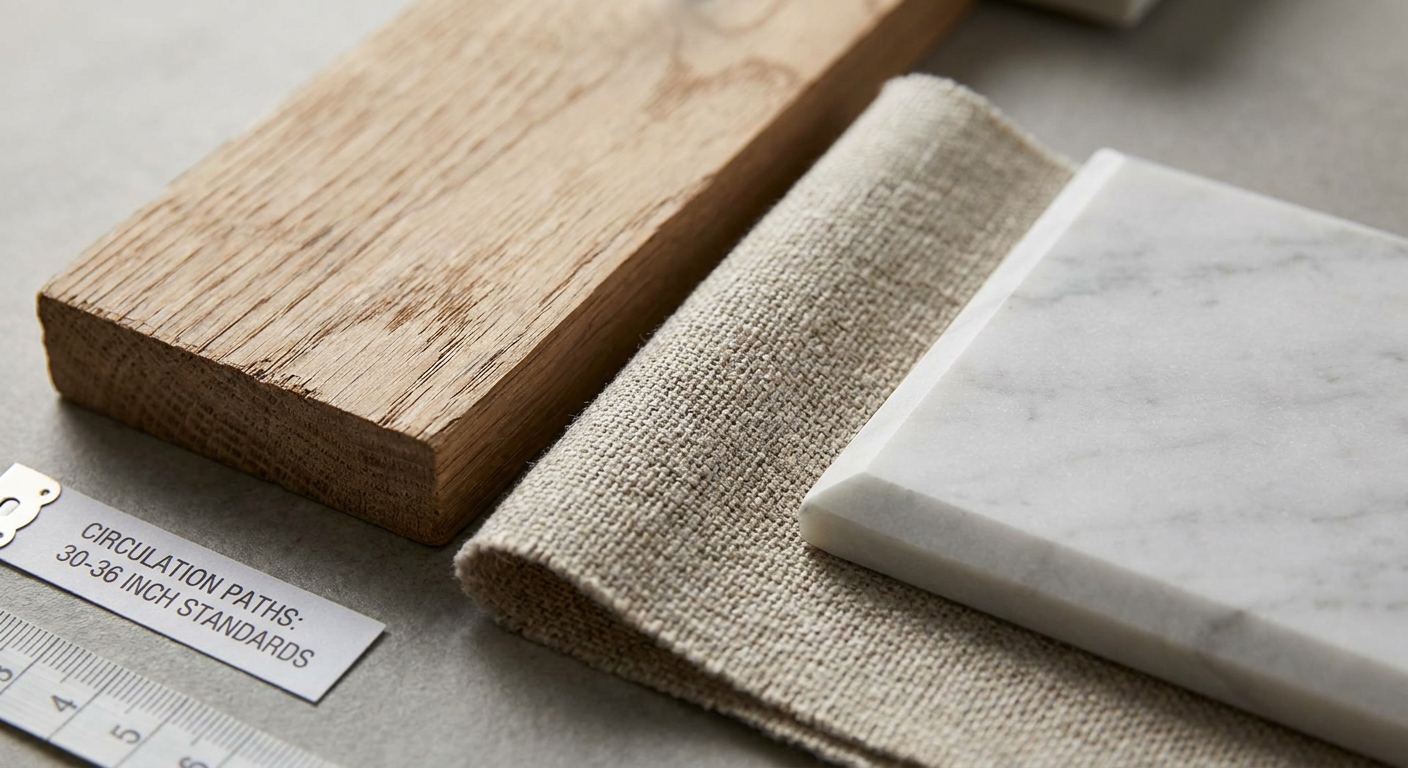
Large-scale sofas and solid marble coffee tables demand generous surrounding floor space to prevent a room from feeling cramped. Interior design experts at Architectural Digest recommend leaving exactly 30 to 36 inches of space between major furniture pieces to create a balanced flow. Referencing general Architectural Digest spatial principles, homeowners should also maintain 16 to 18 inches between a sofa and a coffee table. Adequate spacing allows residents to appreciate the texture of velvet upholstery or the grain of mahogany wood without brushing against the surfaces while walking.
Why specific measurements prevent congestion in villa layouts
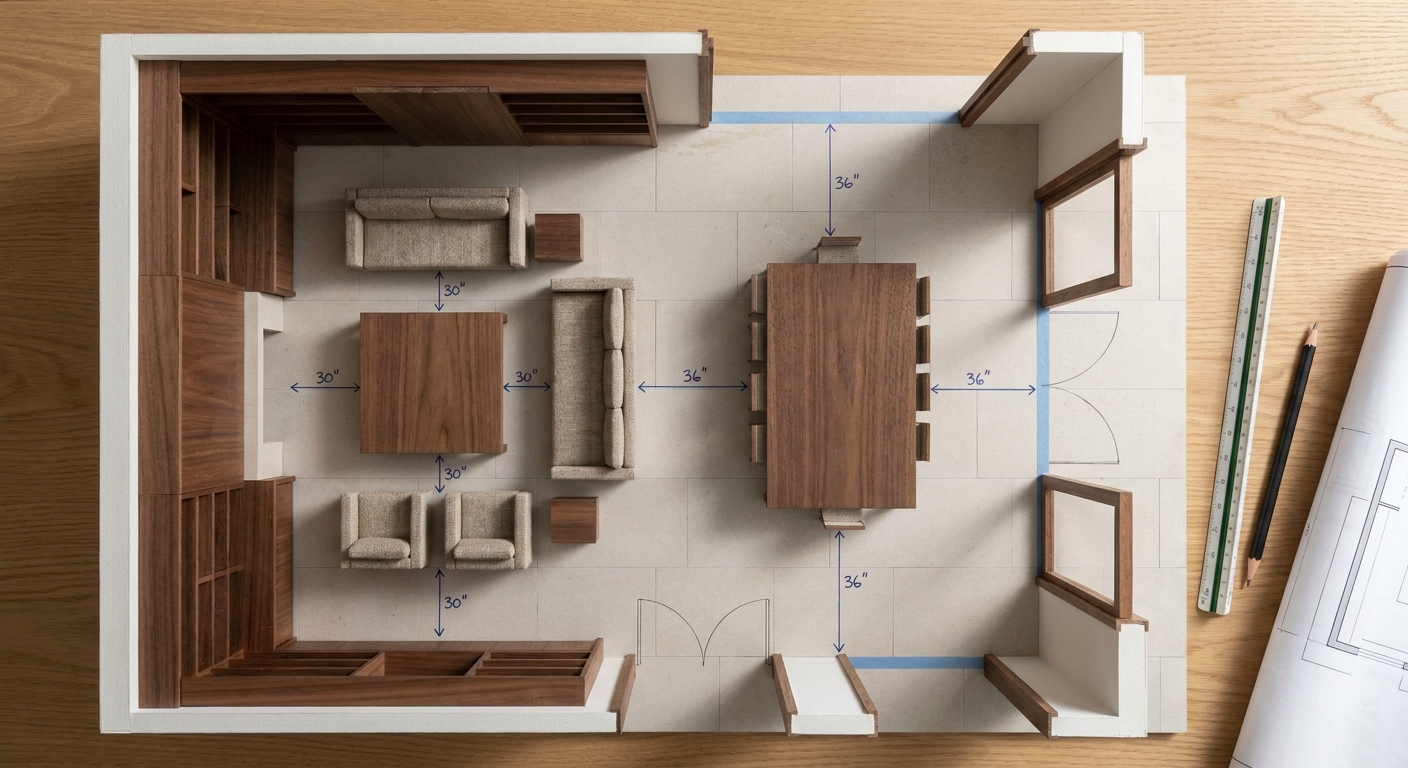
Adhering to exact spatial measurements prevents congestion in villa layouts by providing adequate room for swinging doors, extended recliners, and multiple people walking simultaneously, thereby maintaining a minimum 36-inch primary walkway that aligns with professional accessibility guidelines frequently adapted for adjacent open-concept living spaces. Applying precise dimensions across the entire floor plan guarantees that residents never feel trapped between bulky armchairs and heavy media consoles.
Adapting kitchen guidelines for open-concept spaces
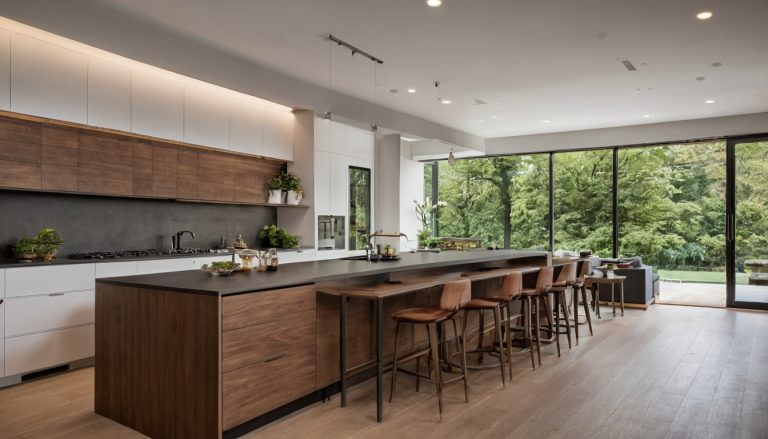
Modern villa layouts frequently merge the kitchen, dining area, and living room into one continuous environment. The National Kitchen and Bath Association requires a minimum 36-inch walkway for residential kitchens, and designers extend the NKBA planning guidelines into the living room to maintain consistent traffic flow. Keeping the primary circulation path uniform across different zones prevents visual disruption and physical hazards. Homeowners must measure the distance from the back of a kitchen island seating area to the nearest living room armchair to guarantee the 36-inch rule remains intact.
Managing heavy materials and structural elements
Incorporating heavy materials like cast iron fireplace surrounds or oversized bronze sculptures requires precise floor planning. Placing a large sculpture too close to a primary walkway forces guests to step sideways, which ruins the spatial harmony of a luxury villa when hosting multiple people. Professional space planners recommend mapping out the 30 to 36 inch circulation paths using masking tape before purchasing heavy decor items to prevent costly return shipping fees. Verifying the physical footprint of each item ensures that the final layout accommodates both aesthetic preferences and functional movement requirements.
Standard clearance measurements for residential interiors
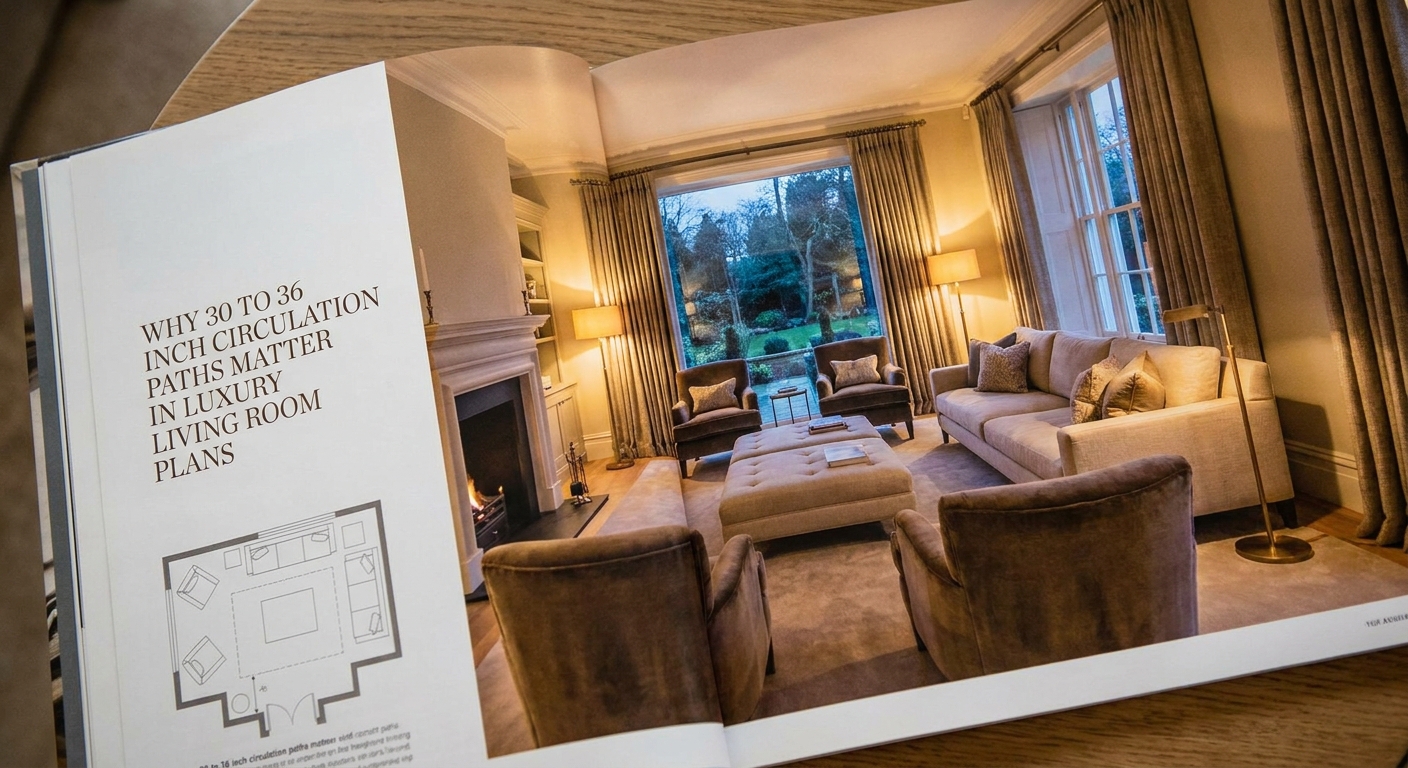
Implementing standard clearance measurements for residential interiors protects the functionality of the home by establishing clear boundaries between active walkways and stationary relaxation areas, allowing planners to position rugs, lighting fixtures, and seating elements accurately so every architectural feature receives adequate breathing room. Reviewing established spatial guidelines helps homeowners verify floor plans before finalizing furniture purchases.
| Design Element | Recommended Clearance | Primary Purpose |
|---|---|---|
| Primary circulation path | 30 to 36 inches | Accommodates standard foot traffic and mobility devices. |
| Sofa to coffee table | 16 to 18 inches | Allows comfortable legroom while keeping items within reach. |
| Area rug to wall | 12 to 18 inches | Creates a visual border that highlights the flooring material. |
| Pendant light to floor | 84 inches | Provides sufficient headroom for tall guests walking underneath. |
Applying clearance rules to seating arrangements
Arranging multiple sofas and accent chairs requires strict adherence to the 30 to 36 inch rule to avoid creating a maze-like environment. Homeowners should follow specific steps when plotting a new seating arrangement:
- Measure the room: Record the total length and width of the empty space.
- Mark the pathways: Identify the primary 36-inch routes connecting all doorways.
- Position the anchor piece: Place the largest sofa first, ensuring the back does not encroach on the main walkway.
- Arrange secondary seating: Place accent chairs at least 30 inches away from the primary sofa to allow easy entry and exit.
Maintaining a dedicated walkway of 30 to 36 inches dramatically improves living room traffic flow and prevents circulation conflicts between adjacent functional zones.
Related reading on this site
Readers comparing planning rules can also review Luxury Outdoor Living Sanctuaries: How Visionary Designers Transform Patios and Terraces into Year-Round Entertainment Paradises in 2025 for adjacent context on the same site.
Material and proportion decisions connect closely with Seamless Indoor-Outdoor Living: The Ultimate Luxury Home Transformation, which gives readers another local reference point.
Project research can continue with Seamless Smart Home Integration: Elevating Luxury Living Through Intelligent Design when the next question concerns a neighboring design topic.