Luxury villa foyer planning succeeds when the entry feels generous, the door operates cleanly, the console wall remains useful, and guests can move without negotiating decorative obstacles. A measured foyer diagnostic helps homeowners, architects, interior designers, and project managers protect circulation before finishes, millwork, lighting, and loose furniture become fixed decisions.
Luxury villa foyer clearances protect guest circulation before furniture selection
Luxury villa foyer clearances protect guest circulation when the entry sequence reserves a continuous route before console tables, benches, planters, and art pedestals are selected. The 2010 ADA Standards accessible route reference includes a 36 inches minimum clear width reference, which designers can use as an accessibility-informed benchmark for private villa planning.
A private luxury villa is not automatically required to follow ADA requirements unless the private villa functions as a regulated public accommodation. A villa design team can still use accessibility-informed references to test whether arrival movement, luggage handling, and host greeting positions remain practical under realistic use.
The foyer plan should separate display zones from movement zones before the design team approves furniture scale. A console table can look appropriately substantial only when the table does not occupy the route that guests need for entry, greeting, and movement toward interior rooms.
| Foyer element | Diagnostic question | Planning implication |
|---|---|---|
| Entry route | Does the main walking line remain clear after furniture placement. | The design team should protect a continuous path before selecting decorative volume. |
| Console wall | Does the console support keys, flowers, and lighting without crowding movement. | The designer should treat furniture depth as adjustable when circulation is tight. |
| Guest arrival position | Can guests pause inside the foyer without standing in the door movement area. | The architect should reserve a waiting pocket outside the active door zone. |
Pivot door planning changes the usable foyer width in luxury villas
Pivot door planning changes usable foyer width because the door leaf, hardware projection, sidelight geometry, and stopping position determine where guests can stand during arrival. The 2010 ADA Standards door opening reference includes a 32 inches minimum clear width reference, which helps teams discuss clear passage without treating private villas as automatically regulated facilities.
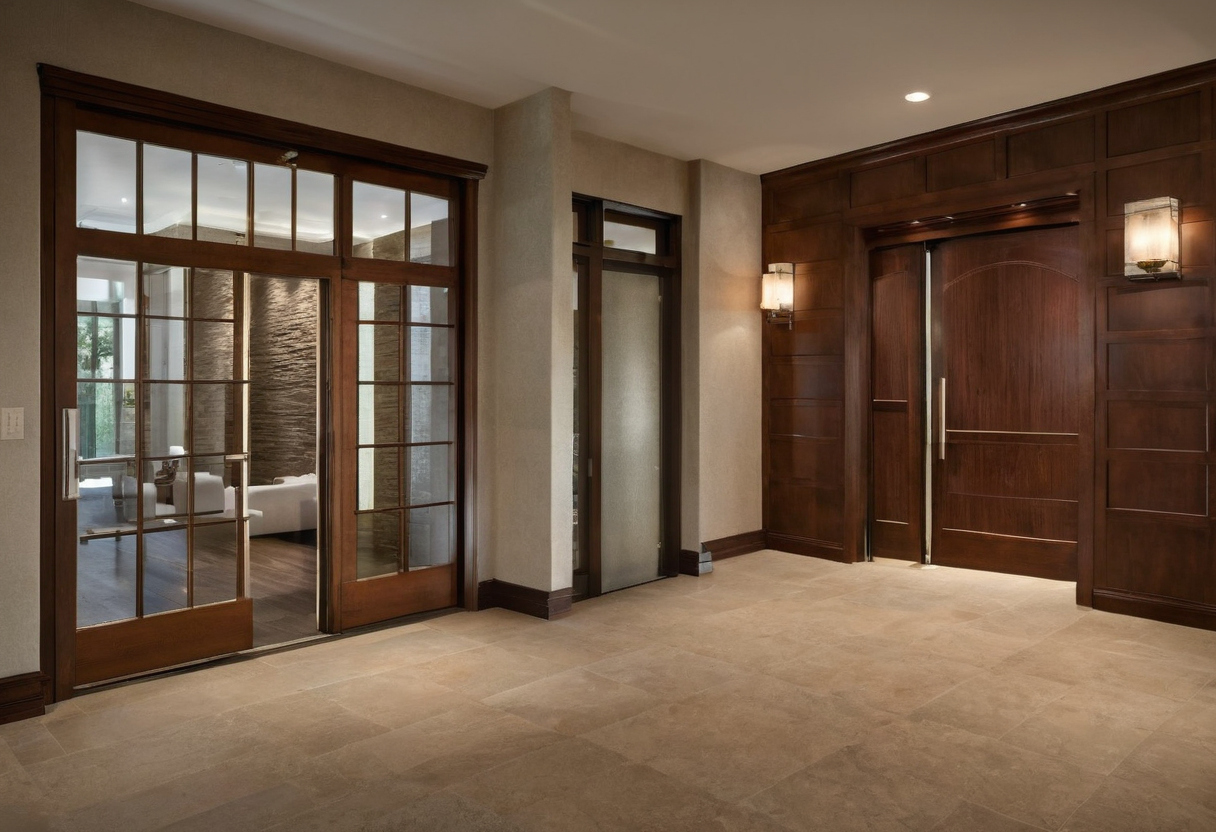
A pivot door can make a villa entry feel architectural, but a pivot door also uses space differently from a conventional hinged door. The architect should show the door position, the handle projection, and the stopping location on the foyer plan before the interior designer sizes a console or bench.
The project manager should ask whether the door can open while a guest stands near the threshold with luggage or a coat. The answer should come from the measured plan rather than from the apparent size of the foyer in a perspective image.
Pivot door clearance diagnostic
- The design team should mark the full door movement area before approving furniture, art pedestals, or floor lamps near the entrance.
- The architect should confirm that the usable passage is not reduced by the pivot offset, handle projection, or decorative hardware.
- The interior designer should keep the most photogenic object outside the path that guests use immediately after entry.
- The homeowner should review the door operation with the same luggage, coats, and hosting habits expected during real arrivals.
Console table depth determines whether a foyer remains passable
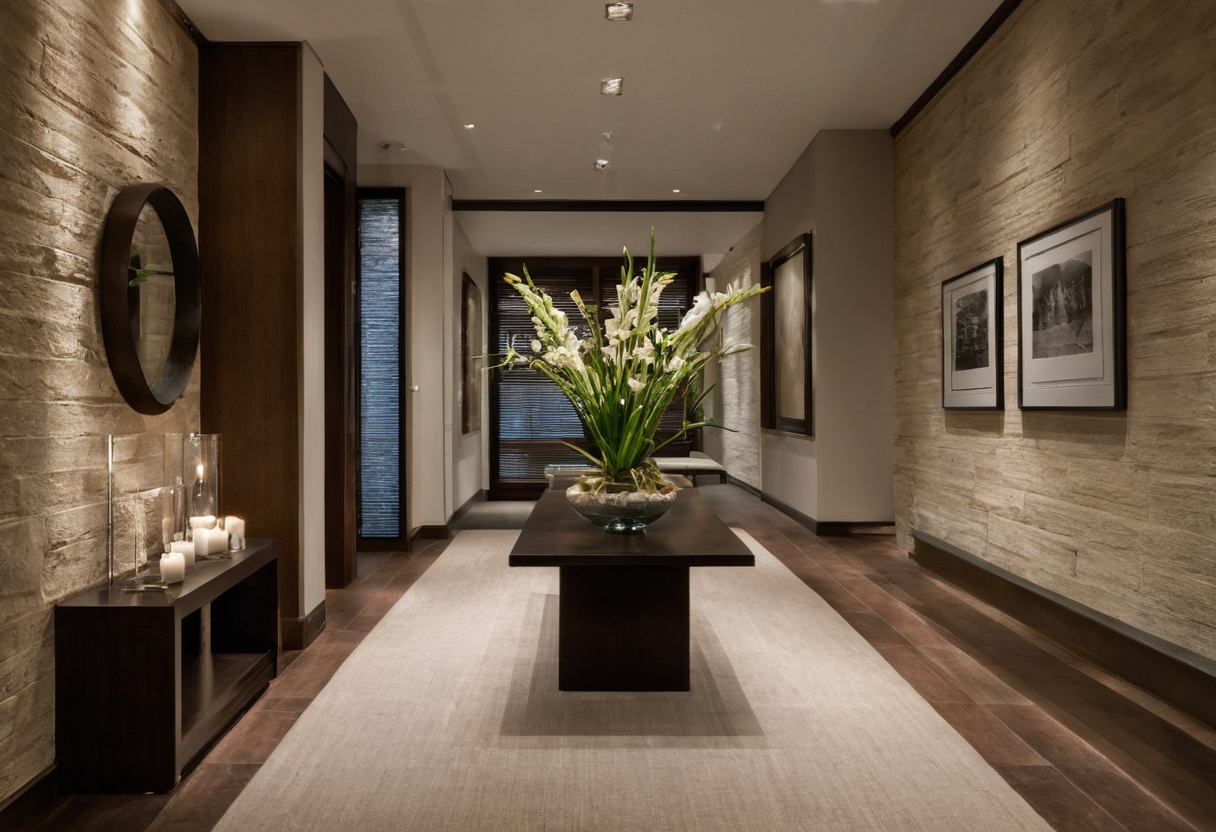
Console table depth determines whether a luxury foyer remains passable because the table occupies the same visual wall zone that guests use while removing shoes, handling luggage, greeting hosts, or waiting near a door. The most successful console plan treats clearance as fixed and furniture depth as adjustable from the beginning.
A console table should support the villa entry ritual without becoming a circulation obstacle. The designer should test the console depth against the protected walking route, the door operation area, the mirror viewing position, and the guest pause location before the homeowner approves the final piece.
A luxury console does not need excessive projection to feel important. Rich materials, precise lighting, integrated trays, disciplined floral scale, and strong wall composition can create a substantial entry moment while the floor plan continues to work for movement.
| Console decision | Risk when unmeasured | Diagnostic response |
|---|---|---|
| Deep furniture profile | The console may narrow the guest route near the entry. | The designer should reduce projection before reducing circulation. |
| Oversized floral arrangement | The arrangement may push guests away from the wall and into the door zone. | The stylist should confirm that display volume does not invade the walking line. |
| Bench below mirror | The bench may convert a visual pause into a physical obstruction. | The team should test whether seated use and standing movement can coexist. |
Clear floor space helps designers place seating, mirrors, and art safely
Clear floor space helps designers place seating, mirrors, and art safely because a foyer must support pauses as well as movement. The 2010 ADA Standards clear floor space reference includes a 30 inches by 48 inches minimum clear floor or ground space reference, which gives villa teams a practical diagnostic for occupied zones.
The clear floor space reference can help a villa team distinguish a display location from a usable guest position. A chair, mirror, sculpture, umbrella stand, or floral plinth should not consume the place where a guest naturally pauses after entering the villa.
A mirror works best when the viewer can stand comfortably without blocking a door or forcing another guest into the console edge. A foyer art wall works best when the viewing position does not compete with coat storage, stair movement, or access to the powder room.
Occupied-zone test for foyer objects
- The designer should identify where a guest stands to use a mirror before placing a bench below the mirror.
- The architect should verify that a sculpture base does not occupy the natural turning area near the entrance.
- The homeowner should confirm that daily bags, pet leads, umbrellas, and deliveries have a landing place outside the protected route.
- The project manager should compare the lighting plan with real standing positions, because a spotlight can encourage guests to pause in an inconvenient area.
Internal room transitions connect foyer planning to guest-wing and powder-room layouts
Internal room transitions connect foyer planning to guest-wing and powder-room layouts because arrival circulation rarely ends at the front door. A villa foyer should preserve clear movement toward adjacent halls, stair approaches, coat storage, and hospitality rooms before decorative moments claim the most convenient walking line.
A foyer that works at arrival must also work after guests move deeper into the villa. The transition from foyer to living room, dining room, guest wing, powder room, or stair hall should remain legible when people enter together, pause for greetings, or return for coats.
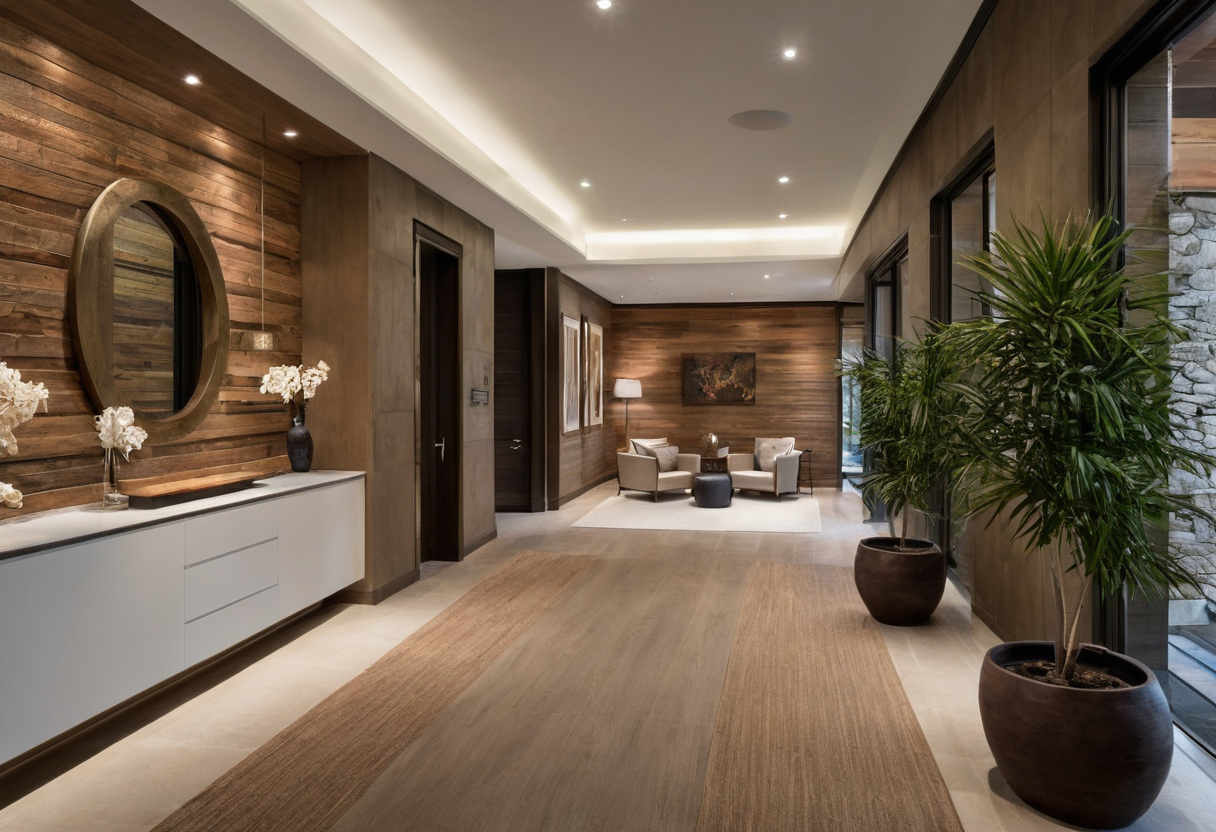
The same circulation thinking applies beyond the entry sequence. For related guidance on protecting movement through refined interiors, review why circulation paths matter in luxury living room plans.
| Adjacent destination | Foyer planning concern | Measured design response |
|---|---|---|
| Powder room | Guests may need a direct path without crossing the door movement zone. | The architect should keep the route readable from the arrival point. |
| Guest wing | Luggage movement may conflict with a console, bench, or art pedestal. | The designer should protect the route before specifying decorative depth. |
| Coat storage | Guests may gather near storage while other guests continue entering. | The plan should provide a waiting position away from the active threshold. |
A measured foyer checklist prevents expensive late-stage revisions
A measured foyer checklist prevents expensive late-stage revisions because the checklist forces the team to test door movement, furniture depth, waiting positions, lighting focus, and adjacent room access before procurement. The diagnostic method is most useful when homeowners evaluate real circulation needs before approving decorative focal points.
The project team should review the foyer plan with the pivot door shown in its operating positions, the console drawn at proposed depth, and the intended guest path clearly reserved. The review should occur before shop drawings, custom furniture orders, stone layout, and electrical locations become difficult to change.
Measured foyer planning checklist
- The architect should show the pivot door movement area and the clear door opening on the same plan used for furniture review.
- The interior designer should confirm that the console depth does not reduce the intended guest route.
- The lighting designer should aim decorative lighting at display zones without encouraging guests to stand in the active door zone.
- The project manager should compare millwork, furniture, stone thresholds, and door hardware before procurement decisions are final.
- The homeowner should test the plan against daily arrivals, formal entertaining, luggage handling, and access to nearby rooms.
A luxury villa foyer feels generous when measurement supports the visual composition. A measured diagnostic allows the entry to carry architectural presence, display important materials, and welcome guests while the pivot door, console table, and interior transitions continue to function without friction.