A homeowner can approve a beautiful stair concept too early: pale stone treads, transparent glass, a quiet handrail, and a dramatic arrival view, yet the same concept can fail if the stride feels awkward, the guard is under-specified, the tread edge disappears in glare, or the finish becomes slippery in daily use.
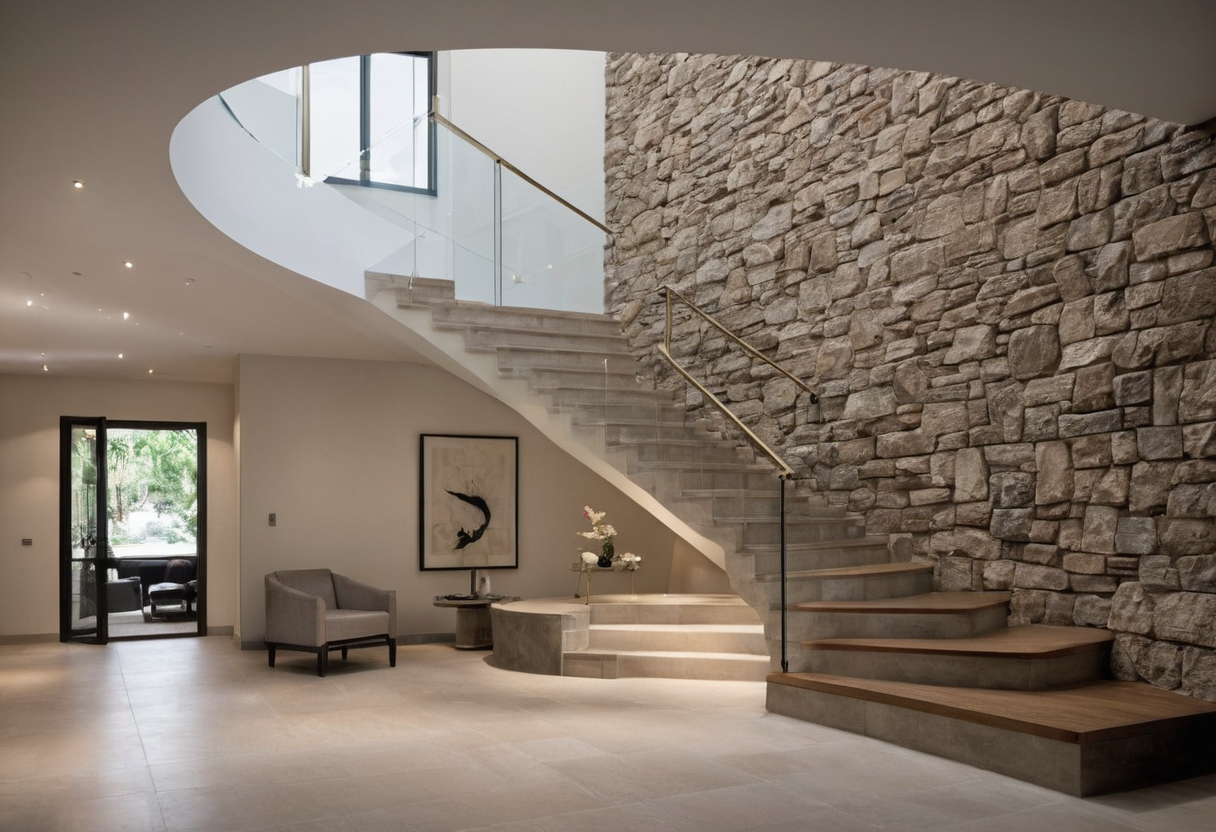
Luxury Staircase Planning: Tread Geometry, Glass Rail Loads, and Lighting Safety shown with finish, fixture, and clearance relationships visible.
What dimensions make a luxury residential staircase comfortable and code-aware?
A luxury residential staircase should start with code-compliant risers, treads, headroom, width, landings, guards, and handrails, then refine those dimensions for comfort, proportion, and daily use after the governing jurisdiction, stair type, and occupant profile are confirmed.
The first design meeting often begins with a graceful sketch: a pale stone stair rising from the foyer, transparent guards, a quiet reveal at each tread, and no visual clutter. The risk is that beauty can outrun coordination. A stair that looks light on paper can feel steep, pinch furniture movement, create dark tread edges, or force expensive changes after fabrication.
The luxury staircase dimension checklist should separate minimum code from preferred comfort targets
The approval gate should distinguish what the building department requires from what the homeowner will feel every day. Local residential code, local amendments, and the stair’s role in the home must control the baseline; comfort targets should improve the experience without replacing the adopted code.
| Review item | Code-aware baseline | Luxury comfort and specification target |
|---|---|---|
| Risers and treads | Confirm the current local rules for riser height, tread depth, nosing projection, and dimensional consistency. | Choose a walking rhythm that suits the main users, then keep every tread edge visually and physically consistent. |
| Width, headroom, and landings | Confirm required stair width, clear headroom, and landing size for the stair type and jurisdiction. | Test guest circulation, furniture movement, and arrival views, especially where the stair meets the foyer or upper gallery. |
| Handrails and guards | Confirm handrail height, guard height, openings, continuity, and graspability with the reviewing authority. | Coordinate the handrail with glass, metal, timber, or plaster details before shop drawings begin. |
| Lighting allowance | Confirm whether the stair needs normal lighting, switched control, or other local safety provisions. | Plan maintainable, glare-controlled LED lighting; ENERGY STAR states that qualified LED lighting uses at least 75 percent less energy and lasts up to 25 times longer than incandescent lighting where qualified products apply. |
| Feature cladding near the stair | Confirm substrate, attachment, edge protection, and access before approving heavy finish concepts. | If Cambria quartz slabs are used for stair-adjacent feature cladding, Cambria lists jumbo slabs at 132 by 65.5 inches, standard slabs at 122 by 55.5 inches, and approximate weights of 10 pounds per square foot for 2 cm and 15 pounds per square foot for 3 cm. |
The project team should record the adopted code path before the stair becomes a render. A detached house, a large villa with staff circulation, a secondary suite, or a shared residential condition may not be reviewed the same way. Early confirmation protects the homeowner from approving a stair profile that later conflicts with riser, tread, guard, or handrail expectations.
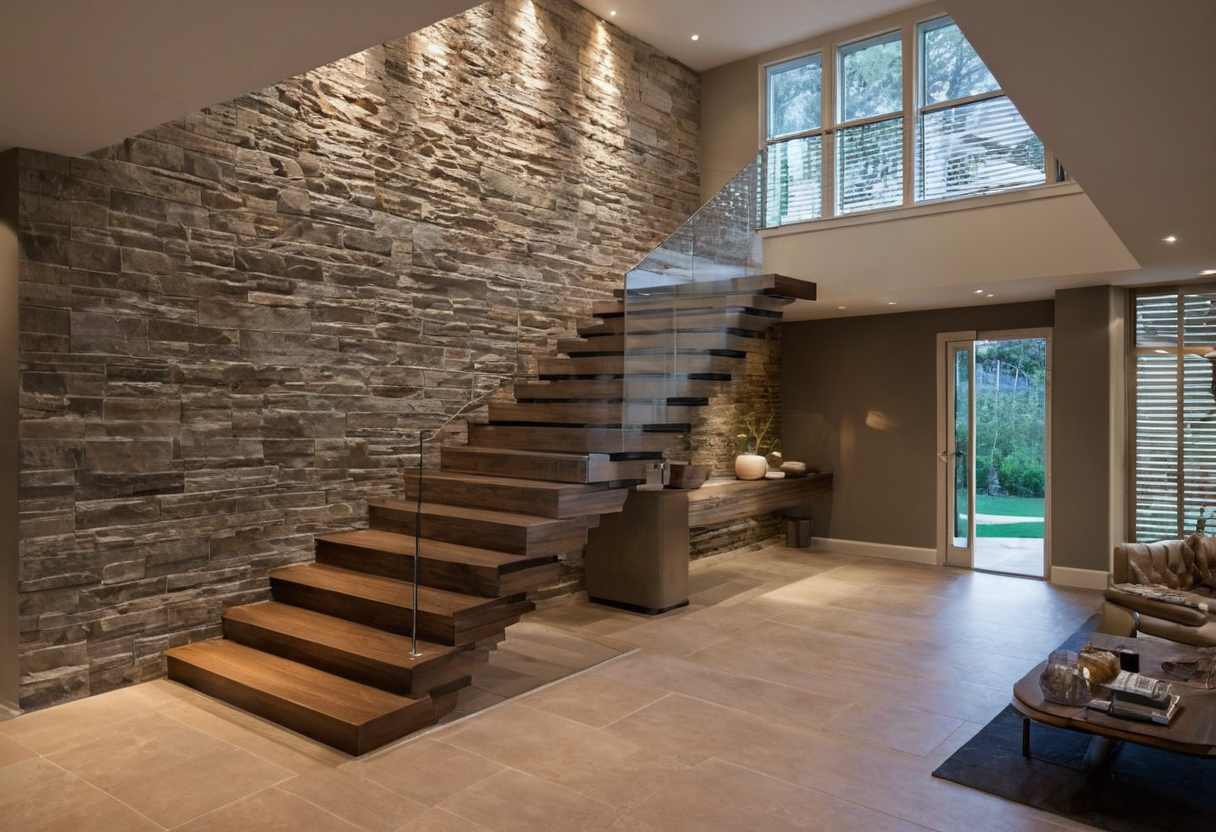
What dimensions make a luxury residential staircase comfortable and code-aware shown with finish, fixture, and clearance relationships visible.
Primary stairs, guest stairs, and feature stairs need different planning assumptions
A primary stair from a formal entry should be reviewed with arrival sequence, traffic volume, and furniture movement in mind. This is where stair planning connects directly to foyer clearance planning for luxury villa entries, because a pivot door, console table, first tread, and guest turning path can compete for the same visual and physical space.
A private bedroom stair can feel more intimate, but the same code-aware discipline still applies. A basement stair may need stronger attention to lighting and perceived steepness. An exterior arrival stair may demand a tougher review of finish, drainage, and edge visibility. A sculptural stair, spiral stair, or alternating-tread concept needs special scrutiny before anyone assumes it can serve as normal daily circulation.
The practical action is simple: name the stair type, name the users, name the governing code path, and approve the design only after the dimensional baseline and comfort intent sit on the same drawing. Once that gate is clear, the next question becomes more exacting: whether the tread geometry will feel graceful underfoot or tiring after repeated use.
Tread geometry determines whether a high-end staircase feels graceful or tiring
Tread geometry controls the daily experience of a luxury staircase because small riser, tread, pitch, and nosing differences multiply over every step, so a safe-feeling interior stair depends on consistent risers, adequate going, visible edges, and a pitch that supports ordinary walking rhythm.
The sculptural stair concept often fails at the point where the rendering becomes a walking surface. A thin floating tread, a deep shadow reveal, or a stone finish that changes thickness after shop drawings can shift the final step feel. The homeowner may still see a beautiful object, but the body reads hesitation, uneven cadence, or a hard-to-find edge.
The practical review action is to freeze the walking line before approving finishes. The architect, stair fabricator, and finish contractor should confirm the finished floor-to-floor height, the number of risers, the final tread build-up, and the visible nosing detail on one coordinated drawing rather than treating structure, stone, timber, carpet, and lighting as separate packages.
Riser-to-tread proportion is the core comfort calculation for luxury staircases
Riser-to-tread proportion sets the rhythm of ascent and descent. Designers commonly test stair comfort through proportion rules that relate riser height to tread depth, then check those proportions against the governing local residential code. The exact permitted range must come from the adopted code and project authority, not from the visual intent of the stair.
Floor-to-floor height drives the entire calculation. If the finished levels change because a thicker stone floor, acoustic underlayment, radiant assembly, or timber build-up is added late, the stair can inherit awkward risers unless the team recalculates the full run. Luxury detailing should therefore start with the finished dimensions, not the rough framing dimensions.
- Red flag: the stair looks shallow and cinematic in elevation, but the walk line feels compressed during a full-size mockup or layout review.
- Red flag: finish thicknesses vary between landings and treads, creating small riser changes that are easy to miss on drawings.
- Red flag: the stair is approved before the final flooring, tread cap, nosing profile, and substrate thickness are coordinated.
Nosing visibility, overhang, and edge detailing reduce missteps on premium finishes
Nosing design turns a premium surface into a readable step. A stair with polished stone, dark timber, metal trim, or glass-side shadows needs a clear edge cue so the foot can locate each tread without searching. The cue can come from profile shape, shadow control, material contrast, or integrated light, but it must remain visible from above and below.
Luxury stair edges also need durability. A delicate bevel may look refined on a sample, yet a busy family stair exposes that edge to shoes, luggage, pets, and cleaning tools. The review should ask the fabricator to show the exact nosing radius, overhang or flush condition, joint location, slip-resistance strategy, and repair path before procurement.
Curved stairs, winders, and floating treads require stricter geometry control
Curved stairs, winders, and floating treads need stricter review because the usable walking path can differ from the glamorous centerline shown in a perspective image. A winder may feel generous at the outside edge and tight near the inside, while a floating stair may feel visually light but psychologically exposed if the edge, guard, and handhold do not read clearly.
The project team should mark the intended walking line on plans and confirm tread depth, handrail continuity, headroom, and perceived stability along that path. For cantilevered or floating treads, the structural engineer should review deflection, vibration, anchorage, and substrate capacity before the finish package is locked. Once the geometry feels calm underfoot, the next question is whether the transparent guard beside it performs as a structural safety system, not only as a minimal visual frame.
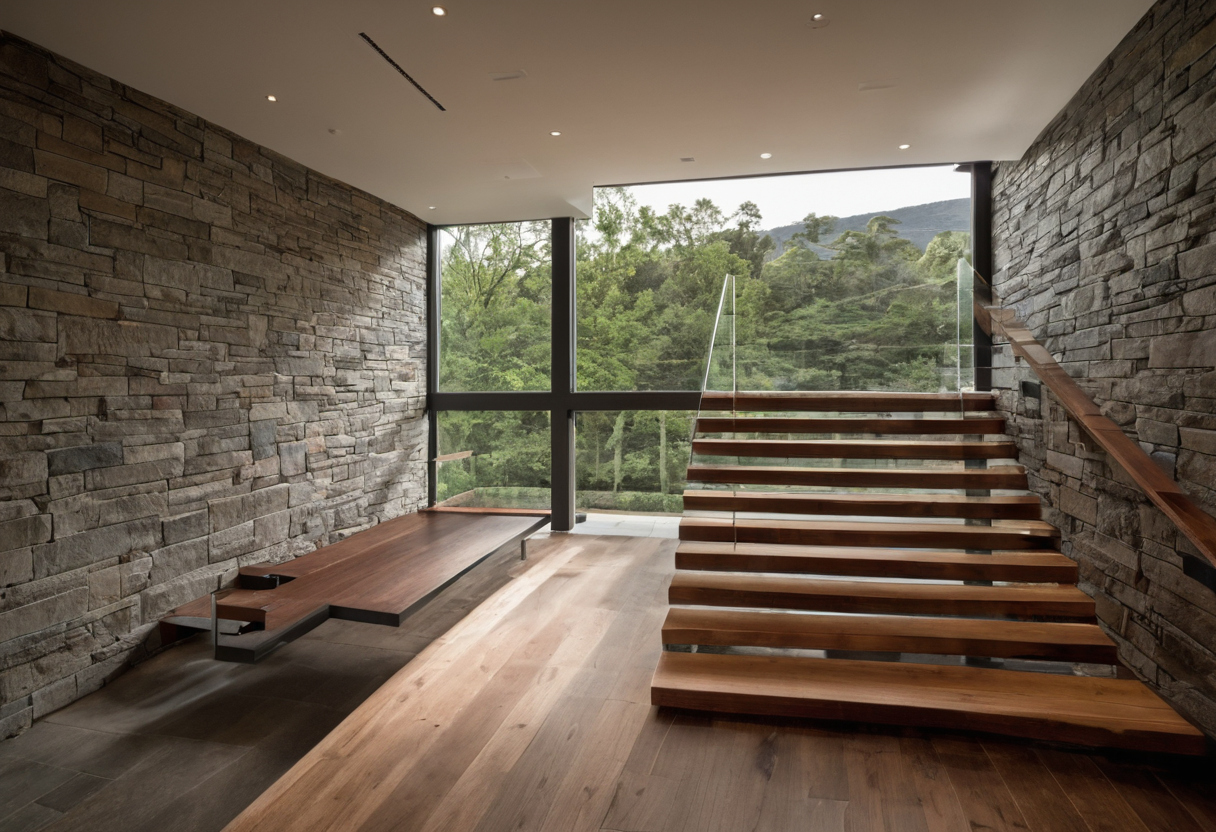
Tread geometry determines whether a high-end staircase feels graceful or tiring shown with finish, fixture, and clearance relationships visible.
Glass rail systems for luxury staircases must be specified as structural guards
Glass railings on luxury staircases are not decorative screens; they are guard assemblies that must resist required loads through glass type, interlayer, fittings, base channels, anchors, and supporting structure.
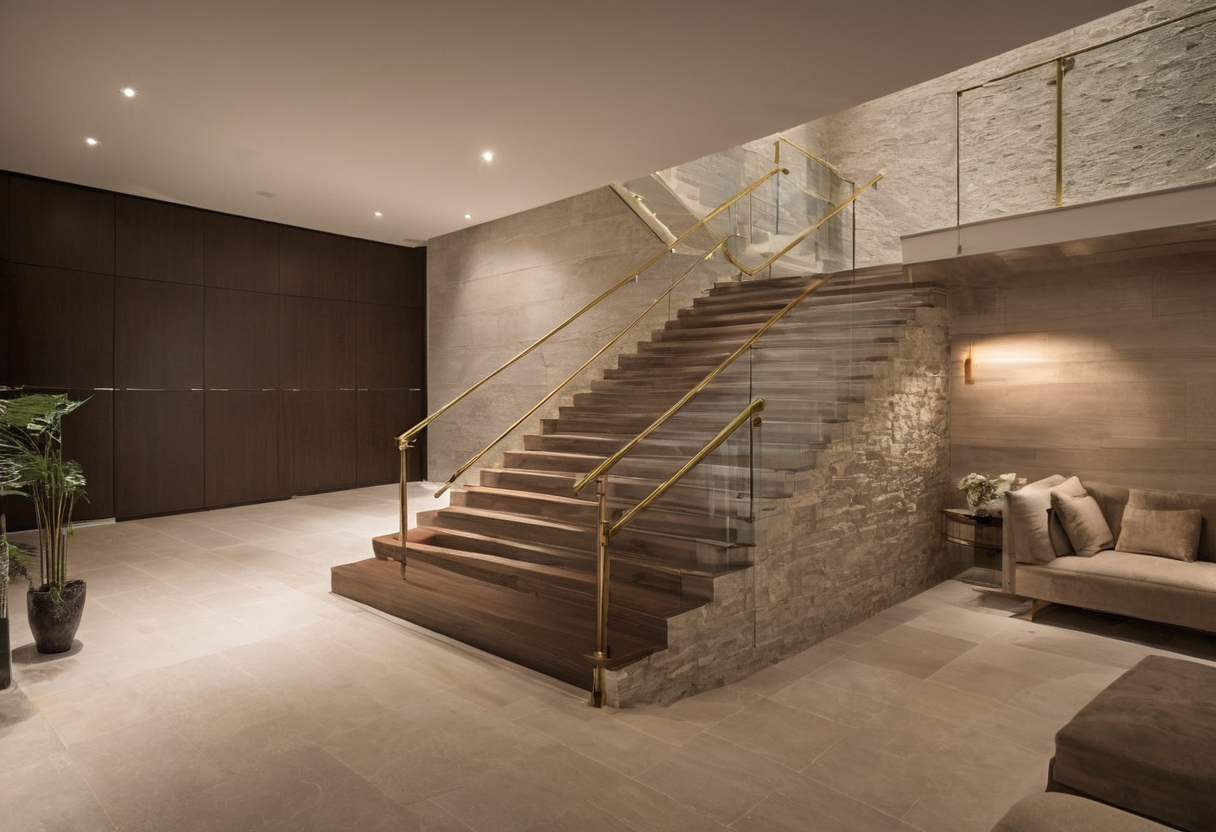
Glass rail systems for luxury staircases must be specified as structural guards shown with finish, fixture, and clearance relationships visible.
The project team may be drawn to the lightest visual line: clear panels, concealed shoes, polished stone landings, and no visible posts. That same restraint can hide the real safety question. A glass guard only works when the whole assembly has been engineered for the stair, the landing edge, the substrate, and the expected movement of the structure below it.
The practical review action is to treat the glass railing as a structural package before approving the interior elevation. The approval set should name the applicable guard load requirements for the project jurisdiction, structural engineer calculations, manufacturer load test data for the exact railing system, glass type and lamination, fixing method, and substrate conditions behind any stone, timber, steel, or concrete support.
- Approve the system, not the sketch: match the glass panels, base shoe, clamps, standoffs, anchors, and backing structure to one tested or engineered assembly.
- Coordinate finishes before fabrication: confirm whether stone cladding, timber trim, plaster returns, or recessed lighting will reduce anchor access or edge clearance.
- Document maintenance and installation products: sealants, coatings, cleaners, and touch-up finishes can affect indoor air quality during installation and early occupancy. The U.S. Environmental Protection Agency identifies paints, varnishes, waxes, cleaning products, building materials, and furnishings as common indoor sources of volatile organic compounds, and recommends increasing ventilation when using products that emit VOCs indoors.
Glass guard load capacity depends on the entire assembly, not the glass panel alone
Glass guard capacity depends on the full load path: the panel, interlayer, base channel or fitting, fasteners, anchors, blocking, framing, and the material that receives the attachment. A thick glass panel can still perform poorly if the shoe is under-supported, the standoff spacing conflicts with framing, or the anchor design assumes a substrate that does not exist on site.
Luxury detailing can make this harder. A stone-clad stringer, recessed base shoe, or floating stair edge may leave little tolerance for anchor embedment, drainage gaps, setting blocks, or inspection access. The engineer and railing supplier should review shop drawings against actual site substrates, not only against the rendered stair profile.
Laminated safety glass and interlayer selection affect post-breakage behavior
Laminated safety glass should be reviewed for more than color, reflectivity, and clarity. The interlayer, exposed edge treatment, panel size, fixing method, and environmental exposure affect how the guard is expected to behave if glass is damaged. A transparent guard beside a stair needs safety glazing compliance and a post-breakage strategy, not only a premium appearance.
The specification should ask for the glass make-up, lamination details, interlayer performance data from the manufacturer, edge protection requirements, and cleaning assumptions. Moisture from entry traffic, UV at tall foyer glazing, and chemical exposure from cleaners can all influence the appropriate edge and interlayer decisions.
Handrails still matter when a glass guard looks clean and minimal
A frameless glass guard can protect an open side, but the handrail question remains separate. Stair users need a graspable, continuous support where local requirements call for one, and many luxury stairs benefit from a handrail even when the visual concept favors uninterrupted glass.
The design team should confirm handrail height, graspability, continuity, returns, clearances from glass, and how the rail connects without overloading or compromising the guard. Once the glass edge is structurally credible, the next risk becomes visibility: every tread must be readable without glare or theatrical blind spots.
Stair lighting should reveal every tread without glare or theatrical blind spots
Luxury stair lighting should make each tread edge legible while avoiding glare into the eyes of someone ascending or descending. In interior residential stairs, the safest scheme usually layers ambient light, low-glare wall or step lights, handrail lighting where appropriate, and controls that maintain visibility during evening and nighttime circulation.
A sculptural stair can fail at night if the lighting concept treats the stair as an object rather than a walking surface. A bright pendant over a glass balustrade may photograph beautifully, yet leave the lower treads in shadow. A recessed step light may feel discreet, yet shine directly into the eyes of someone climbing. A dim scene may suit dinner guests, yet erase the front edge of dark timber or honed stone.
The practical review action is a lighting diagnostic, not a fixture shopping exercise. The project team should test the stair from the top landing, bottom landing, and mid-flight, with the actual handrail, glass, wall finish, tread material, and control scenes represented before final sign-off.
Step lights, wall washers, and handrail LEDs serve different safety roles
Step lights are best used to mark tread rhythm, wall washers are best used to reveal the stair volume, and handrail LEDs are best used to guide the hand and eye along the walking line. The homeowner’s approval should depend on what each layer does for movement, not on how dramatic the stair looks from the foyer.
- Step lights: Use low-glare optics and test the beam from both directions of travel so the fixture reveals the tread edge without creating a bright dot in the user’s sightline.
- Wall washers: Aim for even surface brightness along the stair wall so shadows do not hide the change from one tread to the next.
- Handrail LEDs: Confirm service access, diffuser continuity, heat management, and clean dimming before the rail becomes a sealed custom detail.
Controls deserve the same review as fixtures. A luxury stair often needs a brighter cleaning or guest-arrival scene, a softer evening scene, and a reliable night path that does not require someone to search for a switch at the first step.
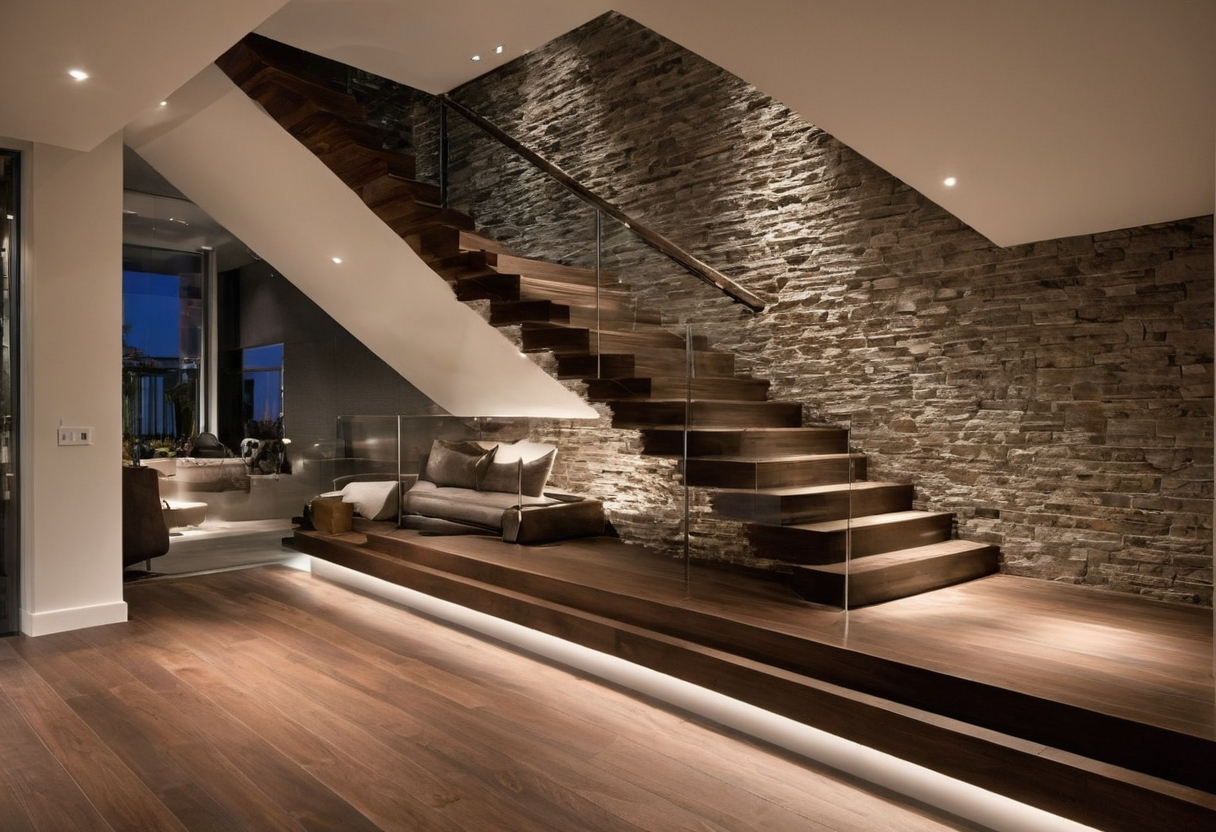
Stair lighting should reveal every tread without glare or theatrical blind spots shown as an editorial reference for proportion and finish coordination.
Reflective stone, glass, and metal finishes require glare testing before final sign-off
Reflective materials can turn careful lighting into visual noise. Polished stone can mirror a point source, glass can double a bright line, and metal trims can flash at the nosing. The risk is not only brightness; the risk is losing contrast exactly where the foot needs information.
The stair should be signed off under daylight, evening, and night conditions, with the tread surface clean and dry, the dimming scenes set, and the glass guard installed or mocked up. Once visibility is proven, the next question becomes harder: whether the chosen luxury materials will stay safe, quiet, durable, and maintainable after daily use.
Luxury stair materials change slip resistance, acoustics, edge durability, and maintenance
Stone, timber, metal, carpet, and large-format porcelain each change how a staircase feels underfoot, sounds in use, and performs at the nosing. For high-end residential interiors, material selection should be judged against slip resistance, edge durability, cleaning method, acoustic comfort, climate stability, and compatibility with the planned tread geometry.
A sculptural stair can fail quietly at the material stage. A polished tread may look calm under gallery lighting but feel slick in socks. A floating timber tread may look warm but transmit footfall into a bedroom wall. A folded metal stair may read as precise, yet feel sharp, cold, or resonant if the build-up and fixings are treated as decoration rather than performance.
The practical review action is to approve the finish as a complete tread assembly, not as a sample. The homeowner should ask for the slip rating or test method for each proposed finish, the exact nosing profile, the installed thickness build-up, the sealer or surface treatment, the cleaning method, and the tolerance the fabricator can hold across every tread and landing.
Stone and porcelain stair treads need verified slip ratings and protected nosings
Stone and porcelain stair treads need a finish schedule that separates showroom beauty from walking safety. Honed, brushed, flamed, textured, or treated surfaces can change the way the foot grips the tread, so the specification should identify the intended condition of use, including dry interiors, pool-adjacent traffic, exterior entries, or stairs cleaned with wet methods.
Premium hard finishes also concentrate risk at the edge. A thin porcelain return, a crisp stone arris, or a shadow-gap nosing can chip, disappear visually, or create a fragile line where the foot lands. The design team should coordinate the edge profile with lighting, tread depth, riser finish, and any anti-slip insert before fabrication begins.
Stone maintenance belongs in the stair decision, especially where moisture may reach the treads. The Natural Stone Institute says natural stone surfaces should be cleaned with neutral cleaners, stone soap, or mild liquid dishwashing detergent and warm water, with the specific stone, sealer, finish, and manufacturer instructions confirmed. For moisture-adjacent areas, the same care guidance supports rinsing thoroughly and drying after washing, and wet-area stone may need squeegee care to limit residue. For related planning logic, see stone slip rating decisions in wet areas.
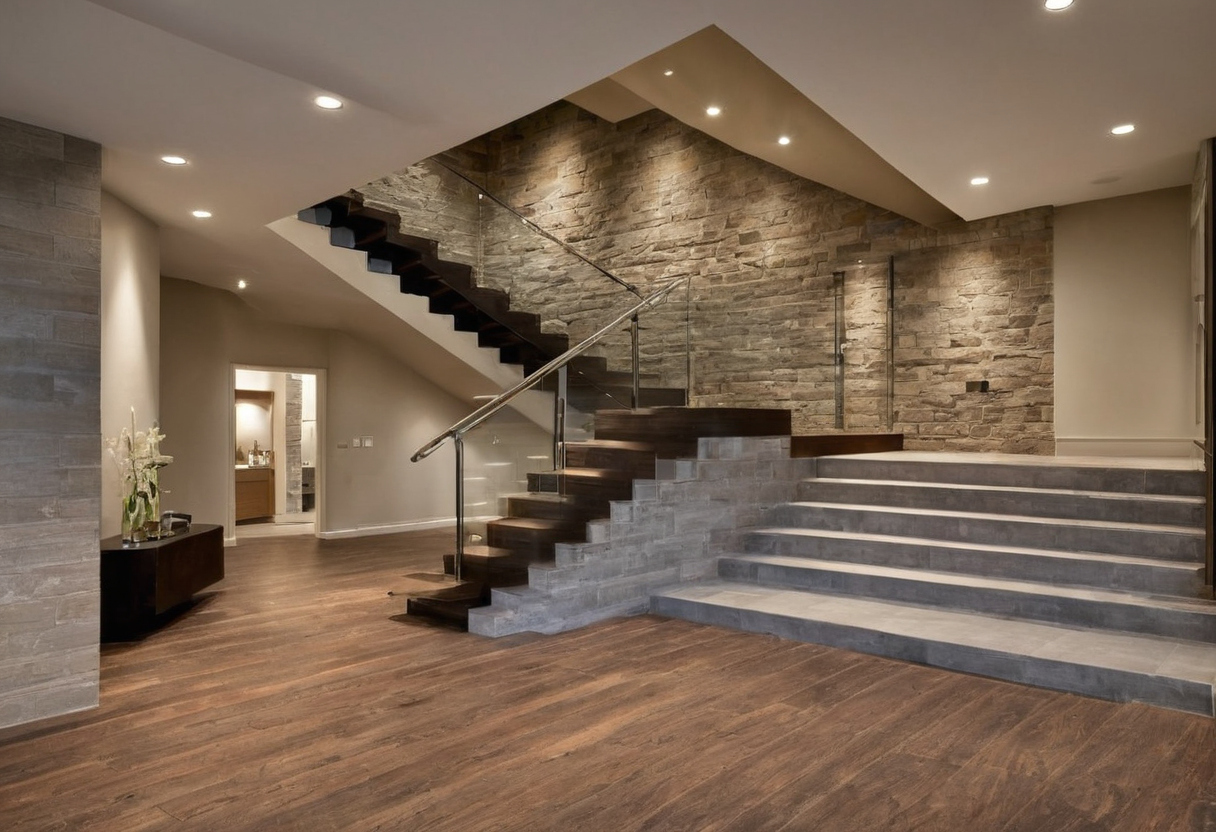
Luxury stair materials change slip resistance, acoustics, edge durability, and maintenance shown as an editorial reference for proportion and finish coordination.
Timber and metal stairs need acoustic and movement planning
Timber stairs need climate and movement assumptions before the final finish is approved. The specification should name the timber species, finish system, moisture expectations, fixing method, and allowance for seasonal movement, because a luxurious tread that cups, squeaks, or opens at a shadow line will undermine the whole foyer experience.
Metal stairs need structural and acoustic review beyond visual slenderness. Plate thickness, weld locations, brackets, stringer stiffness, and isolation pads can affect vibration, ringing, and footfall transfer. Where the stair touches living spaces or bedrooms, the team should ask for an acoustic strategy instead of accepting a beautiful metal profile on appearance alone.
- Confirm the finish thickness and build-up before the stair geometry is locked.
- Confirm the nosing detail before stone, porcelain, timber, or metal fabrication begins.
- Confirm cleaning and maintenance compatibility before sealers, oils, waxes, or textured treatments are approved.
Once the material package proves safe to walk on, quiet enough to live with, and durable enough at the edge, the next question is whether the whole staircase has been reviewed through one coordinated sign-off rather than separate design guesses.
A luxury staircase should be reviewed through a coordinated design and inspection workflow
The best luxury staircase outcomes come from a documented workflow that coordinates the architect, structural engineer, stair fabricator, glass supplier, lighting designer, interior designer, contractor, and code reviewer before construction. This matters most for custom stairs, floating treads, stone cladding, frameless glass, integrated LEDs, and foyer-centered feature staircases.
A sculptural stair can fail quietly on paper before any material arrives. A beautiful concept may hide an awkward floor-to-floor calculation, a glass guard with unclear anchorage, a lighting slot that lands in the wrong wall build-up, or a stone tread profile that cannot be fabricated cleanly. The homeowner protects the design by asking for coordinated sign-off rather than approving isolated drawings.
The staircase specification package should include dimensions, loads, finishes, lighting, and tolerances
The staircase package should move from concept design to permit drawings, then to shop drawings, fabrication approvals, installation checks, and final inspection. Each phase should close a different risk: spatial fit, structural support, guard performance, lighting visibility, finish durability, and site tolerance. This is the same disciplined mindset behind dimension-led planning for luxury kitchen circulation, applied to vertical movement.
The architectural drawings should show stair plans, sections, elevations, landings, headroom zones, handrail routes, guard locations, tread edges, and finish build-ups. The structural information should address stringers, cantilevered tread support, substrates, embedded plates, and connection details. The glass supplier should provide shop drawings and engineering data for the complete guard assembly, not just panel appearance.
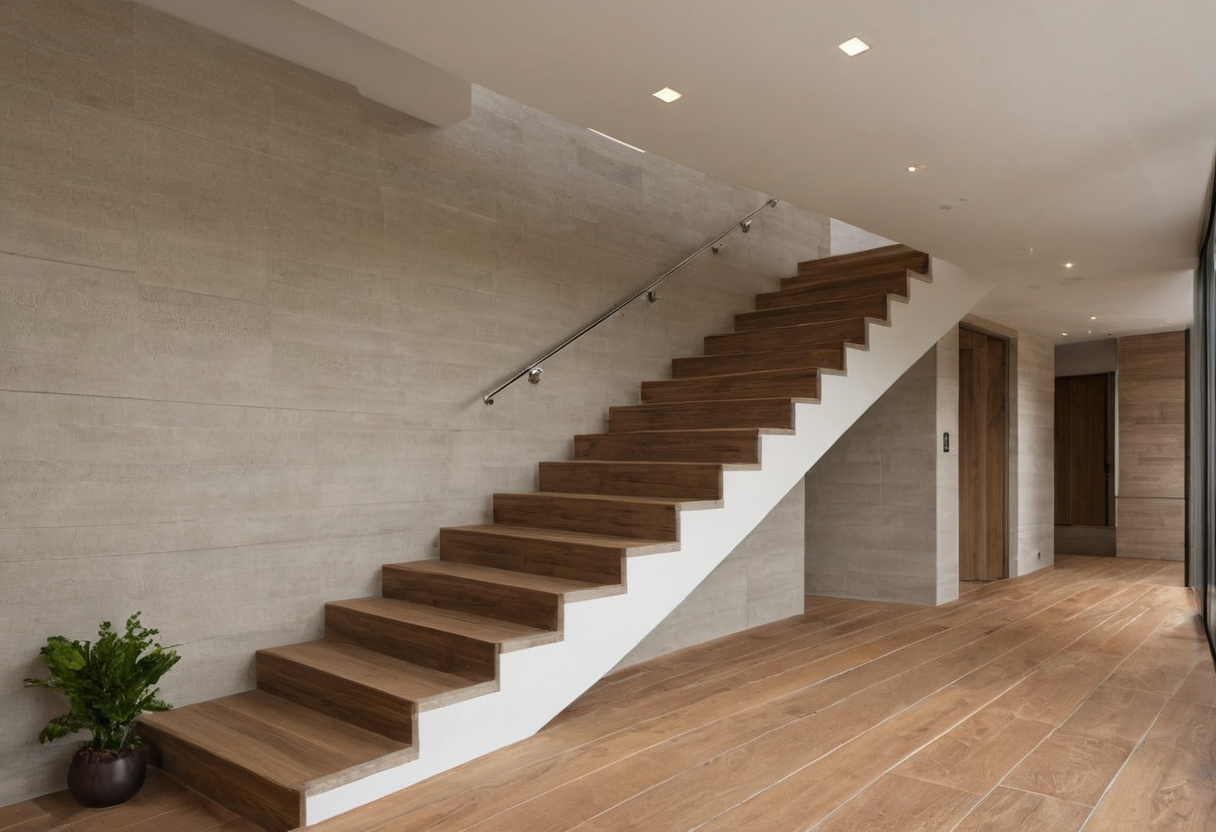
A luxury staircase should be reviewed through a coordinated design and inspection workflow shown as an editorial reference for proportion and finish coordination.
The lighting designer should issue fixture specifications, switching intent, dimming locations, service access, and coordination notes for handrail LEDs, wall lights, or recessed step lights. The interior designer should provide finish samples, nosing profiles, edge contrast decisions, and cleaning expectations. The contractor should confirm which trade owns each concealed backing, junction box, sleeve, bracket, and setting-out point.
Site verification prevents costly luxury staircase fabrication errors
Site measurement should happen after the structure, subfloor strategy, wall alignment, and finish build-ups are known enough to confirm the stair opening. A small field change can shift every riser, tread, glass panel, handrail bracket, and light location. Custom fabrication should wait until the measured conditions match the approved drawings or the drawings have been revised.
Mockups give the project team a physical checkpoint before the staircase becomes expensive to correct. A tread-edge mockup can test nosing visibility and foot feel. A lighting mockup can reveal glare on polished stone, glass, or metal. A glass fixing sample can expose conflicts between base shoes, finished floors, skirtings, and drainage or cleaning details near entries.
Final staircase submittal checklist
- Approved architectural stair plans, sections, elevations, landings, handrails, guards, and finish build-ups.
- Structural calculations, connection details, substrate requirements, and responsibility for concealed supports.
- Glass guard shop drawings, fixing method, edge details, and complete assembly review.
- Lighting layout, switching schedule, fixture specifications, access points, and glare mockup approval.
- Finish samples, tread-edge details, nosing profiles, slip documentation where applicable, and maintenance notes.
- Field measurements for floor-to-floor height, wall alignment, opening dimensions, stringer position, and finished surfaces.
- Final inspection review for consistent geometry, secure guards, usable handrails, visible tread edges, working lights, and finish defects.
The changed planning behavior is simple: approve a luxury staircase only when the coordinated specification proves that the elegant object can also work as a safe, buildable, inspectable route through the home.
FAQ
What is the most comfortable riser and tread combination for a luxury residential staircase?
The most comfortable combination is the one that satisfies the governing local code, fits the finished floor-to-floor height, and creates a consistent walking rhythm for the main users. The project team should calculate the stair from finished surfaces, not rough framing, and should verify every riser, tread, landing, and nosing condition before fabrication.
Are frameless glass railings safe enough for a high-end home staircase?
Frameless glass railings can be appropriate when they are specified as complete engineered guard assemblies. The review should cover the glass make-up, interlayer, base shoe or fittings, anchors, supporting substrate, and manufacturer or engineer documentation for the exact system proposed.
Do glass guards still need a separate handrail on residential stairs?
A glass guard and a handrail solve related but different problems. The glass guard protects the open side, while the handrail gives the stair user a graspable support. The design team should confirm local handrail requirements and coordinate height, continuity, graspability, returns, and clearance from the glass.
What stair lighting layout is safest without making the staircase look commercial?
A refined residential layout usually layers soft ambient light with low-glare step lights, wall washing, or handrail LEDs where appropriate. The safest visual result is not the brightest scene; it is the scene where each tread edge remains legible from the top, bottom, and middle of the stair without glare into the user’s eyes.
Which luxury stair material is least slippery: stone, timber, metal, porcelain, or carpet?
No material is automatically least slippery in every stair condition. Finish texture, sealers, cleaning methods, moisture exposure, socks or footwear, edge detail, and lighting all change performance. The better decision is to request slip documentation where applicable, review the exact nosing profile, and approve the material as a complete tread assembly rather than as a loose sample.