Imagine stepping into your closet and feeling like you’ve entered the personal styling suite of a luxury department store. The lighting perfectly illuminates every garment, the climate control preserves your most treasured pieces, and an intelligent inventory system knows exactly where each item lives. This isn’t fantasy – it’s the new reality of luxury dressing room design in 2025.
The challenge for affluent homeowners has evolved beyond simply having enough storage space. Today’s luxury wardrobe collections demand sophisticated preservation systems, smart organization technology, and the kind of refined atmosphere that transforms daily dressing into a curated experience. Generic walk-in closets with basic shelving simply can’t accommodate the complex needs of designer garments, seasonal rotation requirements, and the desire for a truly elevated daily ritual.
Visionary designers are responding with revolutionary approaches that blend boutique-style aesthetics with cutting-edge technology, creating dressing sanctuaries that rival the world’s most exclusive fashion houses. These transformations represent a fundamental shift in how we think about personal style and wardrobe management.
The architecture of elevated personal style
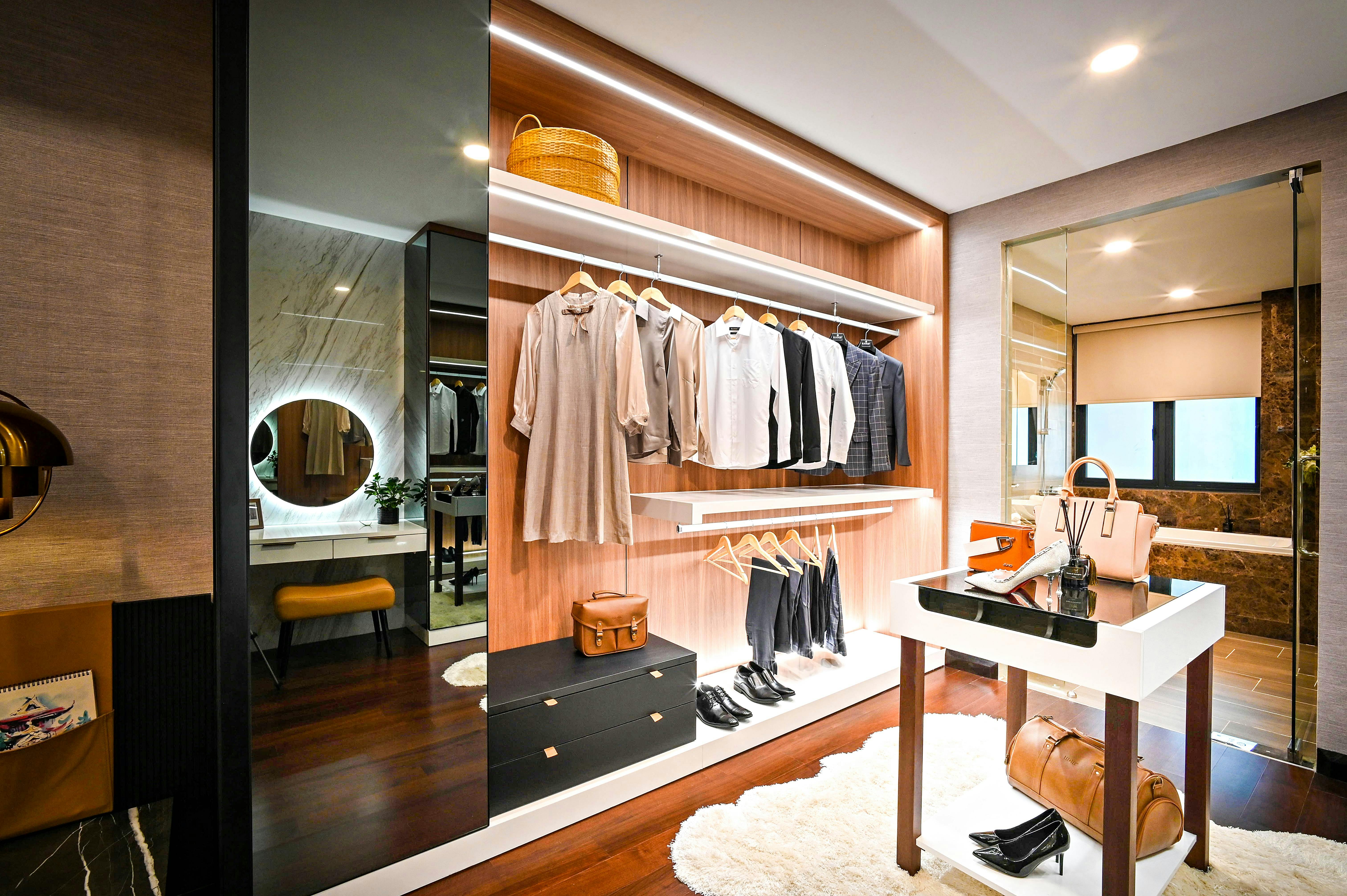
The foundation of any exceptional dressing room lies in its architectural bones. Leading designers approach these spaces like they’re creating a high-end retail environment, with careful attention to sight lines, traffic flow, and the psychology of color and light.
This Photo was taken by Huy Quang Nguyễn.
The most successful transformations begin with proper spatial planning. Professional designers typically allocate 36 to 42 inches for primary circulation paths – wider than the 30 to 36 inch circulation paths used in luxury living areas because dressing rooms require space for movement while trying on garments and accessing storage at various heights.
Ceiling heights of 10 to 12 feet allow for dramatic vertical storage solutions and create the sense of grandeur found in luxury boutiques. Designers often incorporate architectural elements like coffered ceilings, crown molding, or decorative ceiling medallions to add visual interest and reinforce the room’s elevated status within the home.
Material selection sets the tone for the entire space. Hardwood flooring in rich walnut or oak provides warmth and luxury underfoot, while marble or travertine adds sophistication in larger spaces. Many designers opt for heated flooring systems to enhance comfort during morning and evening dressing routines.
Creating zones for different wardrobe categories
The most effective luxury dressing rooms function like department stores, with distinct zones for different types of clothing and accessories. This approach not only improves organization but also creates visual rhythm and makes the space feel larger and more purposeful.
Formal wear typically receives prime real estate – eye-level hanging space with the best lighting and easy accessibility. These areas often feature extra-wide hangers and additional breathing room between garments to prevent wrinkling and allow proper air circulation.
Casual wear and everyday items occupy accessible but secondary positions, while seasonal or special occasion pieces can be housed in higher or less immediately accessible areas. This hierarchy mimics the way luxury retailers organize their floor space, placing the most important items at eye level and within easy reach.
Smart inventory management systems that eliminate wardrobe chaos
The integration of technology into luxury dressing rooms represents one of the most significant advances in home design for 2025. These systems go far beyond simple organization to create truly intelligent wardrobe management.
RFID tagging systems allow each garment to be tracked and catalogued digitally. When combined with smart closet apps, these systems can suggest outfits based on weather, calendar events, or personal preferences. Some systems even track how often items are worn and suggest when pieces might need cleaning or maintenance.
| Technology Feature | Function | User Benefit |
|---|---|---|
| RFID Inventory Tracking | Automatic garment identification | Never lose track of any item |
| Smart Mirror Integration | Virtual try-on and styling | Experiment with looks without changing |
| Weather-Based Suggestions | Outfit recommendations by conditions | Always appropriately dressed |
| Maintenance Alerts | Cleaning and care reminders | Extends garment lifespan |
This Photo was taken by Jaime Joel Vargas Huacre.
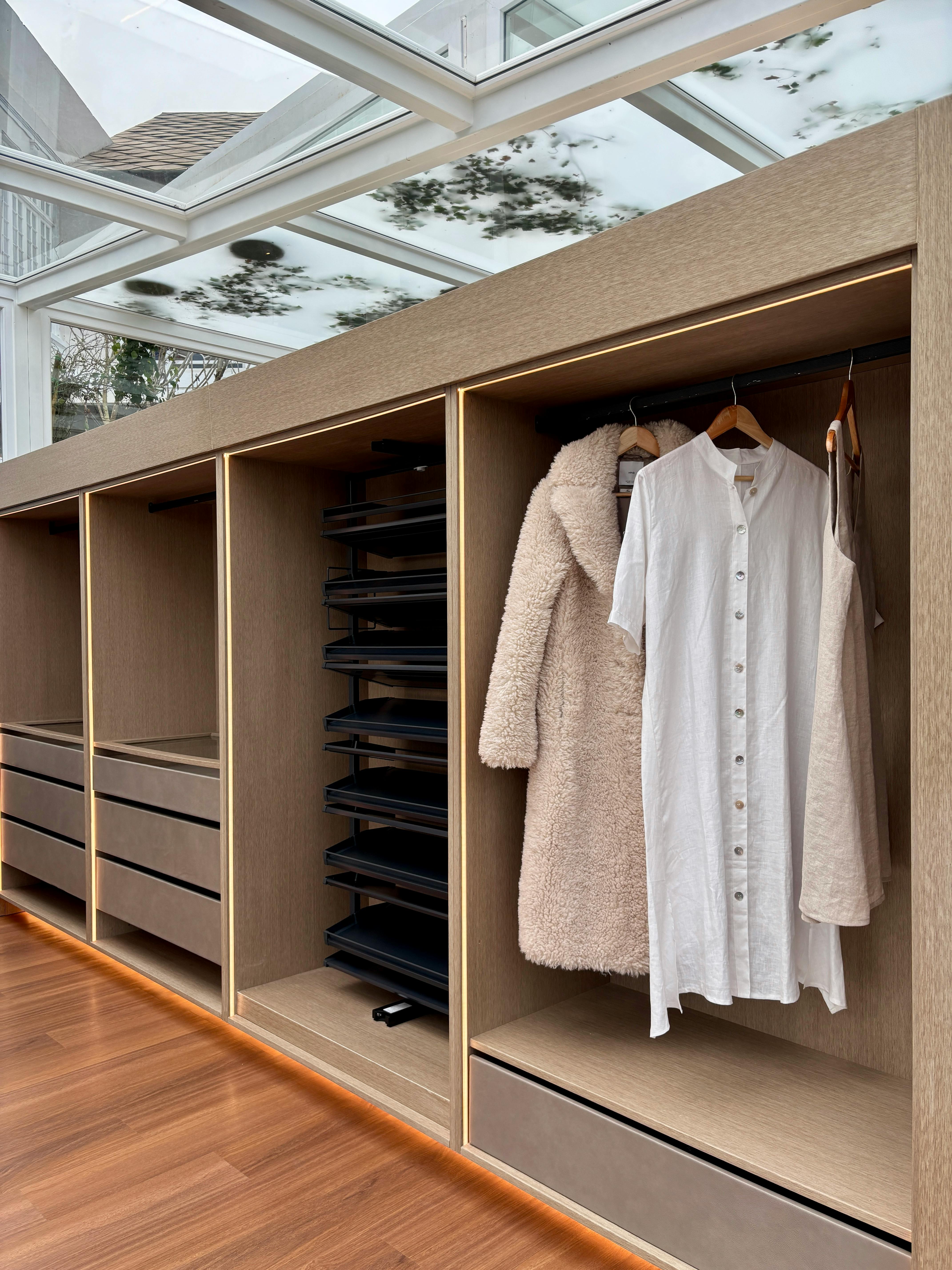
Automated garment lifts and rotating storage systems maximize space utilization while keeping everything accessible. These motorized systems can bring high-storage items down to eye level at the touch of a button, eliminating the need for step stools or reaching.
Digital closet management platforms have become increasingly sophisticated, with some systems capable of photographing outfits and storing them for future reference. This creates a personal style database that can inspire future combinations and help users avoid repeating the same looks too frequently.
Integration with smart home ecosystems
The most advanced dressing room systems integrate seamlessly with broader smart home platforms. Voice control allows for hands-free operation of lighting, music, and storage systems while getting dressed. Calendar integration can automatically prepare appropriate attire for scheduled meetings or events.
These systems can even coordinate with other areas of the home. For example, they might communicate with luxury master bathroom systems to ensure optimal timing for morning routines, or with private fitness studio systems to prepare workout attire based on scheduled exercise sessions.
Climate-controlled preservation systems that protect your investment
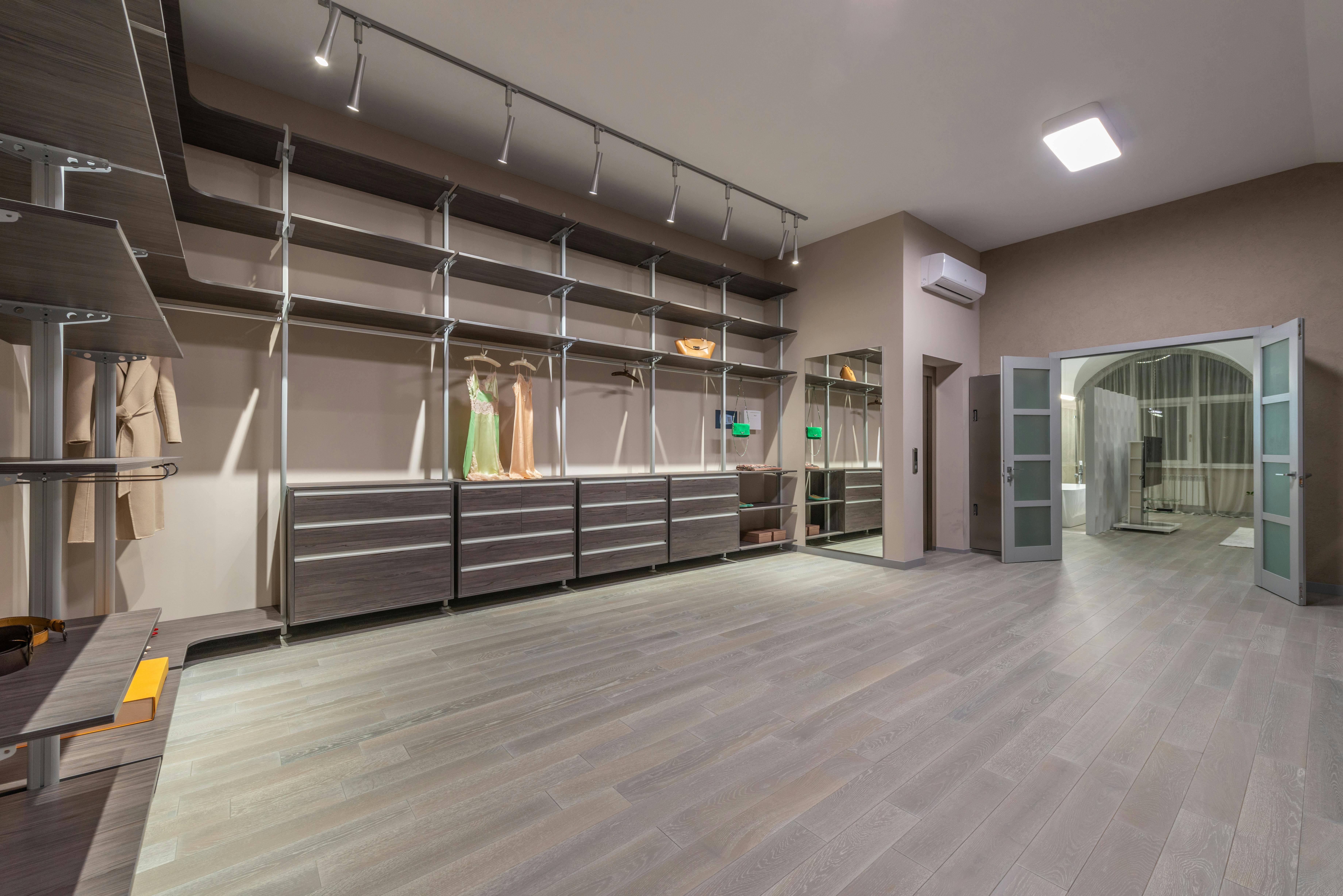
Luxury garments represent significant financial investments, often requiring the same level of environmental protection as fine art or rare books. Professional-grade climate control systems maintain optimal temperature and humidity levels to prevent damage from moisture, heat, and UV exposure.
Museum-quality environmental controls maintain temperatures between 65-70°F and relative humidity levels between 45-55%. These precise conditions prevent the deterioration that can affect natural fibers like silk, wool, and leather. Advanced systems monitor air quality and can filter out pollutants that might cause discoloration or deterioration over time.
This Photo was taken by Max Vakhtbovych.
UV-filtering glass protects garments from harmful light exposure while still allowing for natural illumination. LED lighting systems generate minimal heat and can be programmed to provide optimal color rendering for accurate color matching during outfit selection.
Air circulation systems ensure consistent temperature throughout the space while preventing stagnant conditions that can lead to odor or mildew issues. Some advanced systems include ozone generators that naturally eliminate bacteria and odors without chemical treatments.
Specialized storage for high-value items
Certain garments and accessories require even more specialized protection. Cedar-lined compartments protect wool garments from moths while adding a pleasant natural scent. Temperature-controlled drawers maintain optimal conditions for delicate items like vintage pieces or designer accessories.
Fur storage requires temperatures below 50°F and may warrant dedicated refrigerated units. Some luxury dressing rooms include small cold storage areas specifically designed for fur and other temperature-sensitive items, similar to systems used in professional garment storage facilities.
Fine jewelry and watch storage often incorporates security features alongside climate control. Biometric locks, motion sensors, and even direct connections to security systems ensure that valuable accessories remain protected while easily accessible to the owner.
Boutique-inspired lighting design that transforms daily rituals
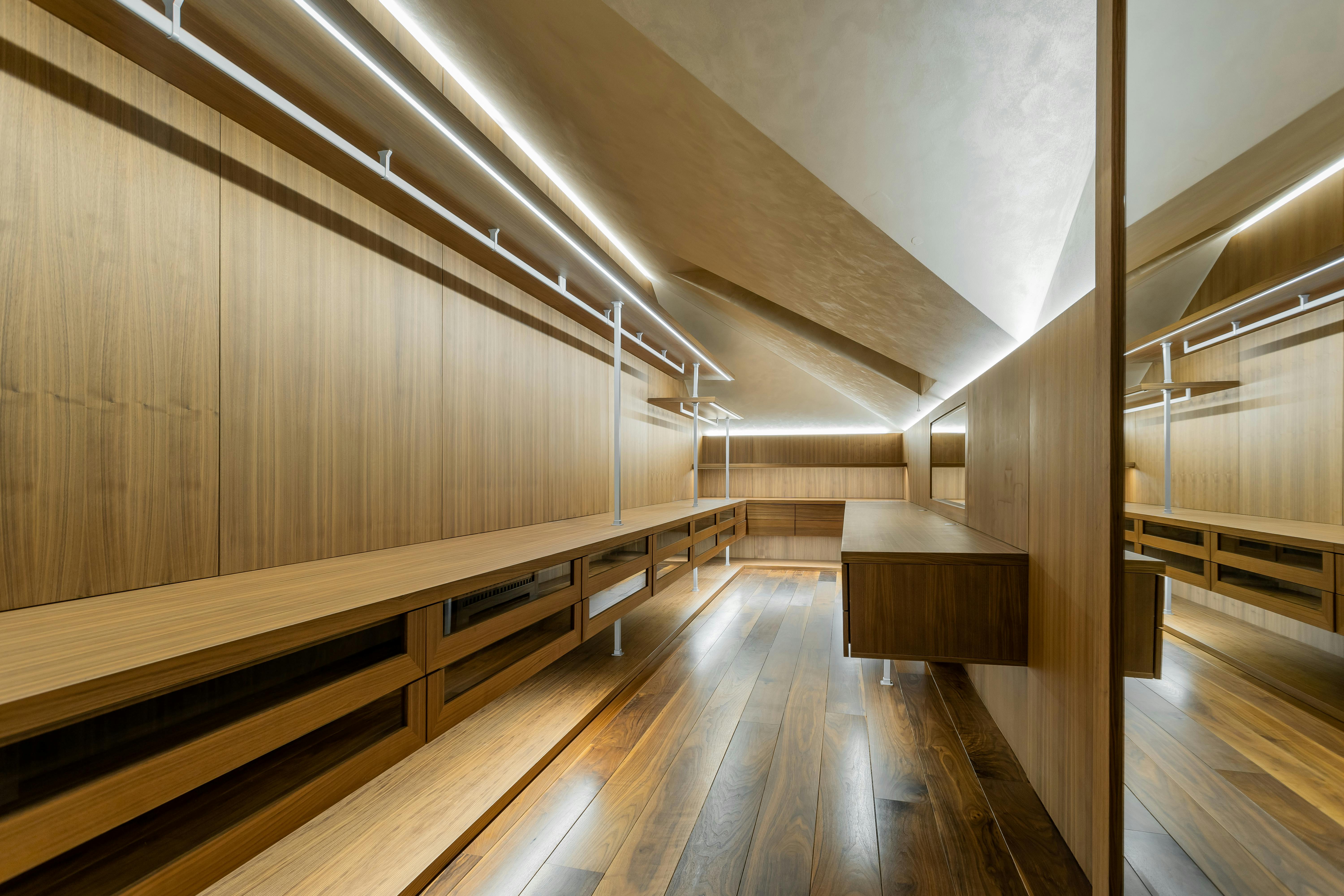
Lighting in luxury dressing rooms serves multiple purposes: it must provide accurate color rendering for outfit coordination, create an flattering atmosphere for trying on garments, and contribute to the overall aesthetic appeal of the space.
Professional retail lighting techniques form the foundation of effective dressing room illumination. Track lighting with adjustable spots allows for focused illumination of specific storage areas, while recessed ceiling fixtures provide general ambient lighting throughout the space.
This Photo was taken by Алан Албегов.
Color temperature selection critically affects how garments appear. Most designers specify lights with a Color Rendering Index (CRI) of 90 or higher to ensure accurate color representation. Adjustable color temperature systems allow users to simulate different lighting conditions – indoor office lighting, outdoor daylight, or evening ambient light – to see how outfits will appear in various settings.
Mirror lighting requires special attention to eliminate shadows while providing flattering illumination. Professional-grade vanity lighting with multiple sources ensures even coverage from all angles. Some installations include full-body mirrors with integrated LED strips that provide 360-degree illumination for complete outfit evaluation.
Dramatic accent lighting for showcase displays
Beyond functional requirements, lighting creates drama and visual interest within the space. Display cases for special accessories or featured garments often incorporate museum-quality lighting systems with precise beam control and minimal UV output.
Accent lighting can highlight architectural features like coffered ceilings or decorative millwork, while under-cabinet lighting ensures that even deep storage areas remain well-illuminated and accessible.
Automated lighting systems can be programmed for different scenarios – bright task lighting for organizing and sorting, softer ambient lighting for relaxed browsing, and dramatic accent lighting for entertaining when the dressing room is part of a home tour or party.
Luxury finishes and materials that rival high-end retail
The material palette in luxury dressing rooms must balance durability with sophistication, creating an environment that feels both practical and indulgent. The most successful spaces borrow heavily from high-end retail design, using materials and finishes that communicate luxury while standing up to daily use.
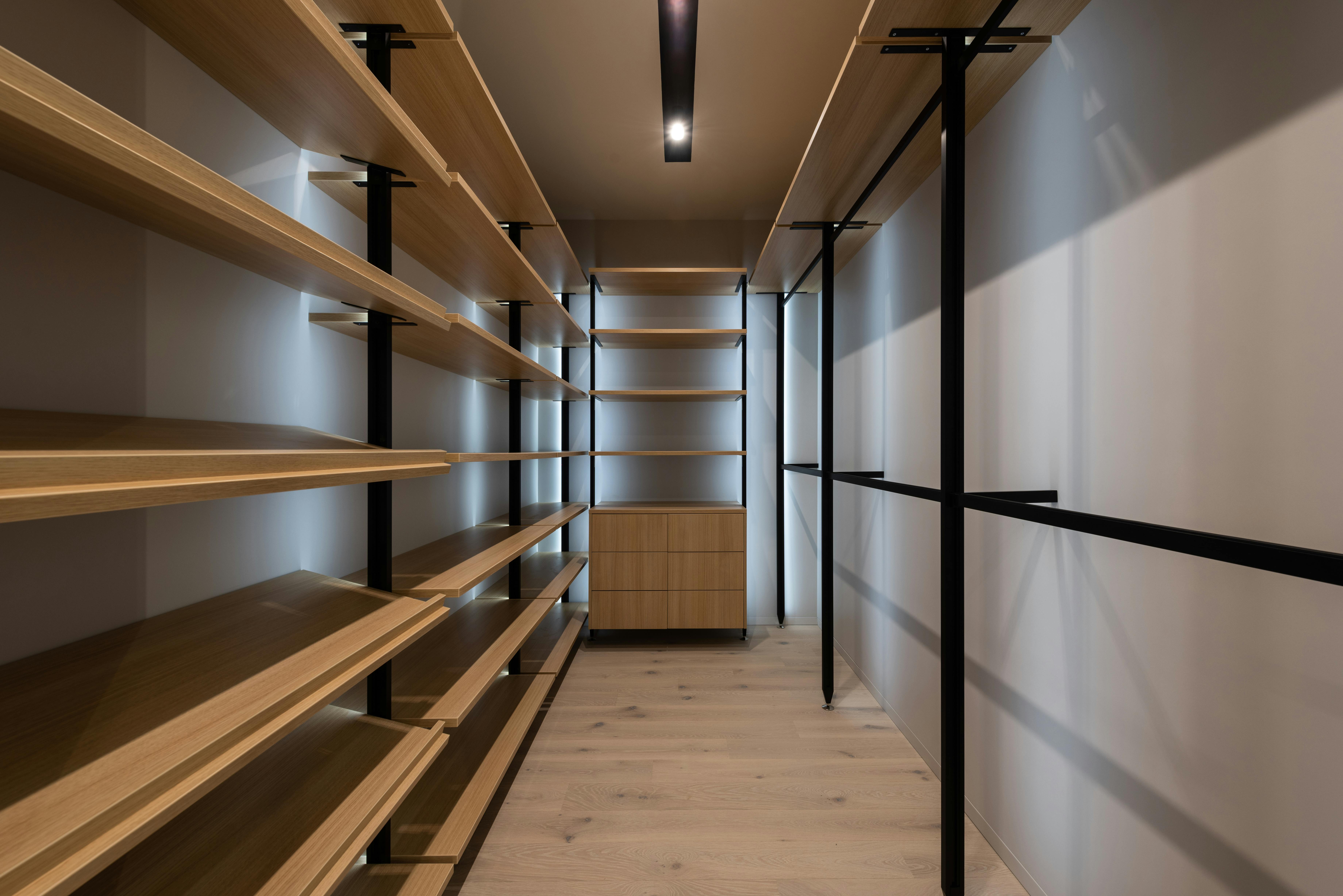
Custom millwork in rich hardwoods like walnut, cherry, or mahogany provides the foundation for most luxury installations. These materials develop character over time while maintaining their sophisticated appearance. Many designers specify hand-rubbed finishes that highlight the natural grain while providing protection against wear.
This Photo was taken by Max Vakhtbovych.
Hardware selection significantly impacts the overall aesthetic. Many luxury installations feature custom pulls and handles in brushed brass, polished nickel, or even semi-precious materials like horn or leather. The quality of these details becomes apparent through daily use and contributes to the space’s sense of refinement.
Upholstered elements like seating areas, drawer liners, and accessory displays often feature luxury fabrics in neutral tones that complement rather than compete with the stored garments. Mohair, silk, and fine wool fabrics add textural interest while maintaining the sophisticated color palette.
Integration with architectural elements
The most successful dressing room transformations feel integral to the home’s overall design rather than added as an afterthought. This requires careful coordination with existing architectural elements and attention to details like baseboard profiles, crown molding, and ceiling treatments.
Many designers extend the home’s existing hardwood flooring into the dressing area to maintain visual continuity. When this isn’t possible, they select complementary materials that harmonize with adjacent spaces like luxury master bedrooms or spa-inspired bathrooms.
Seating areas and styling stations for the complete experience
A luxury dressing room extends beyond storage to include areas for contemplating outfit choices, trying on different combinations, and preparing for the day ahead. These spaces require the same level of design attention as formal living areas.
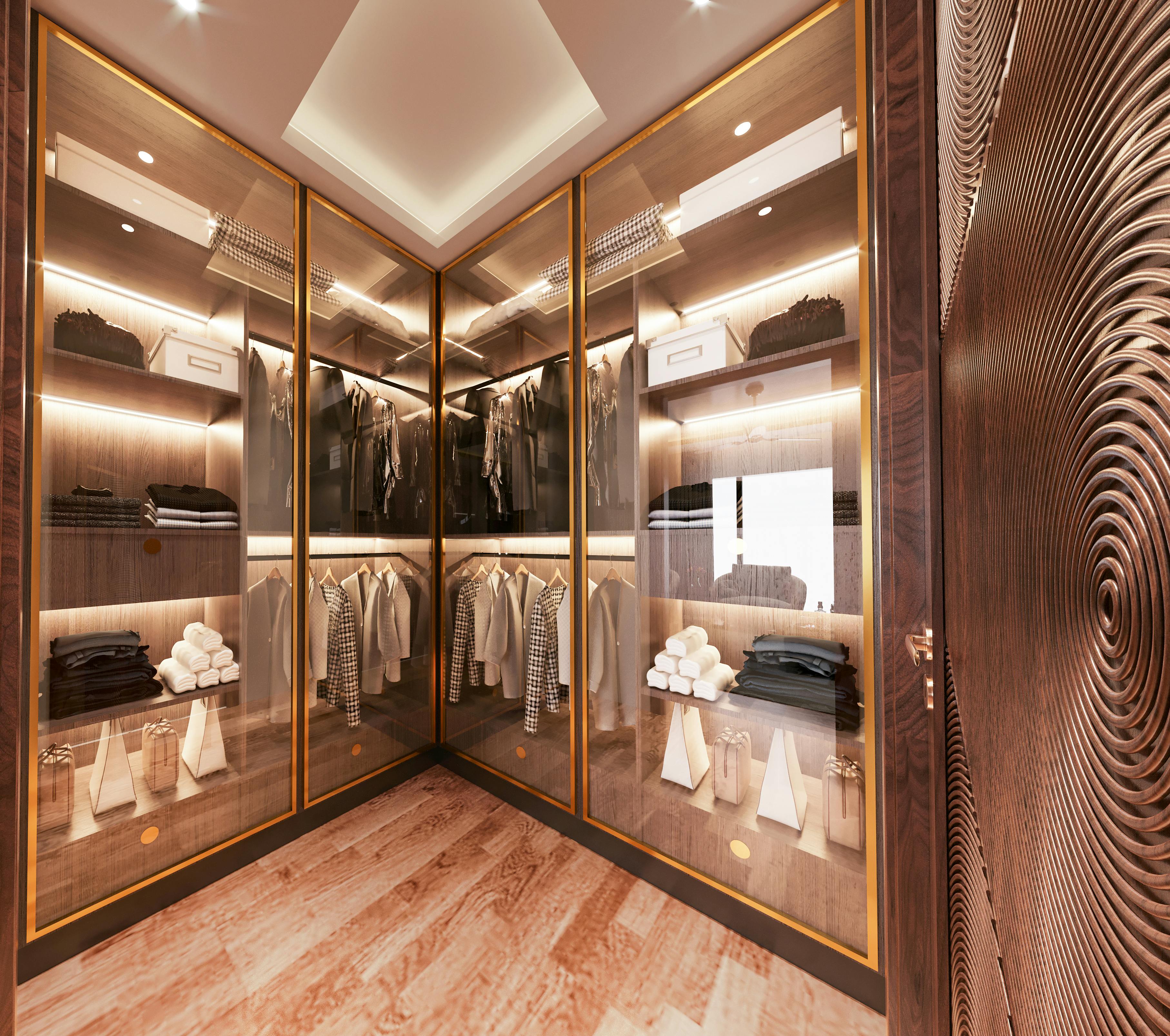
Seating options range from elegant ottomans for putting on shoes to full chaise lounges for relaxed outfit planning. The scale and style must complement the room’s overall aesthetic while providing practical functionality. Many installations include multiple seating options to accommodate different activities and preferences.
This Photo was taken by Rana Matloob Hussain.
Styling stations often incorporate elements borrowed from professional stylists’ workspaces. These might include dedicated areas for jewelry organization, spaces for laying out complete outfits, and even small refrigerated drawers for storing beauty products that benefit from cool temperatures.
Technology integration at styling stations can include smart mirrors that photograph outfits for future reference, integrated charging stations for devices, and even professional-grade lighting for detailed grooming tasks.
Privacy and acoustics for personal sanctuary
The luxury dressing room serves as a private retreat within the home, requiring careful attention to acoustics and privacy. Sound-absorbing materials like thick carpets, upholstered wall panels, or acoustic ceiling treatments ensure that the space feels quiet and secluded.
Window treatments, when windows are present, must balance natural light with privacy needs. Many designers specify motorized blinds or shades that can be programmed to adjust throughout the day, providing privacy during dressing while allowing natural light for color evaluation when needed.
Innovative storage solutions that maximize every inch
Efficiency drives many of the most impressive innovations in luxury dressing room design. Even generous spaces benefit from creative storage solutions that maximize capacity while maintaining easy access to every item.
Motorized clothing rods can be raised or lowered to accommodate users of different heights or to access seasonal storage areas. Some systems include multiple levels that can be independently controlled, effectively doubling or tripling hanging capacity within the same footprint.

This Photo was taken by Max Vakhtbovych.
Pull-out storage systems bring deep shelves and compartments into easy reach. These might include tie and belt organizers, jewelry drawers with custom compartments, or shoe storage that displays each pair clearly while maximizing density.
Vertical storage solutions take advantage of high ceilings through custom ladder systems or motorized platforms. These allow access to seasonal or rarely used items without sacrificing the convenience of eye-level storage for everyday pieces.
Specialized compartments for unique needs
Different wardrobe components require different storage approaches. Handbags need adequate space and support to maintain their shape, often requiring custom shelving with individual compartments. Shoes may need climate control to prevent leather deterioration and organization systems that display each pair clearly.
Delicate items like silk scarves or vintage pieces might require drawer storage with specialized dividers and acid-free tissue paper. Some installations include dedicated pressing areas with built-in ironing boards and steam systems for quick touch-ups.
The most comprehensive luxury dressing rooms even include laundry processing areas with sorting bins, spot-treatment stations, and direct connections to professional laundry facilities elsewhere in the home.
Technology integration that anticipates tomorrow’s needs
The rapid pace of technological advancement means that luxury dressing rooms designed today must accommodate systems that don’t yet exist. Future-proofing requires both robust infrastructure and flexible design approaches that can adapt to new technologies.
Comprehensive electrical systems with abundant outlets and data connections ensure that new devices can be integrated without major renovations. Many installations include dedicated equipment closets that house servers, control systems, and other technology components away from the main dressing area.
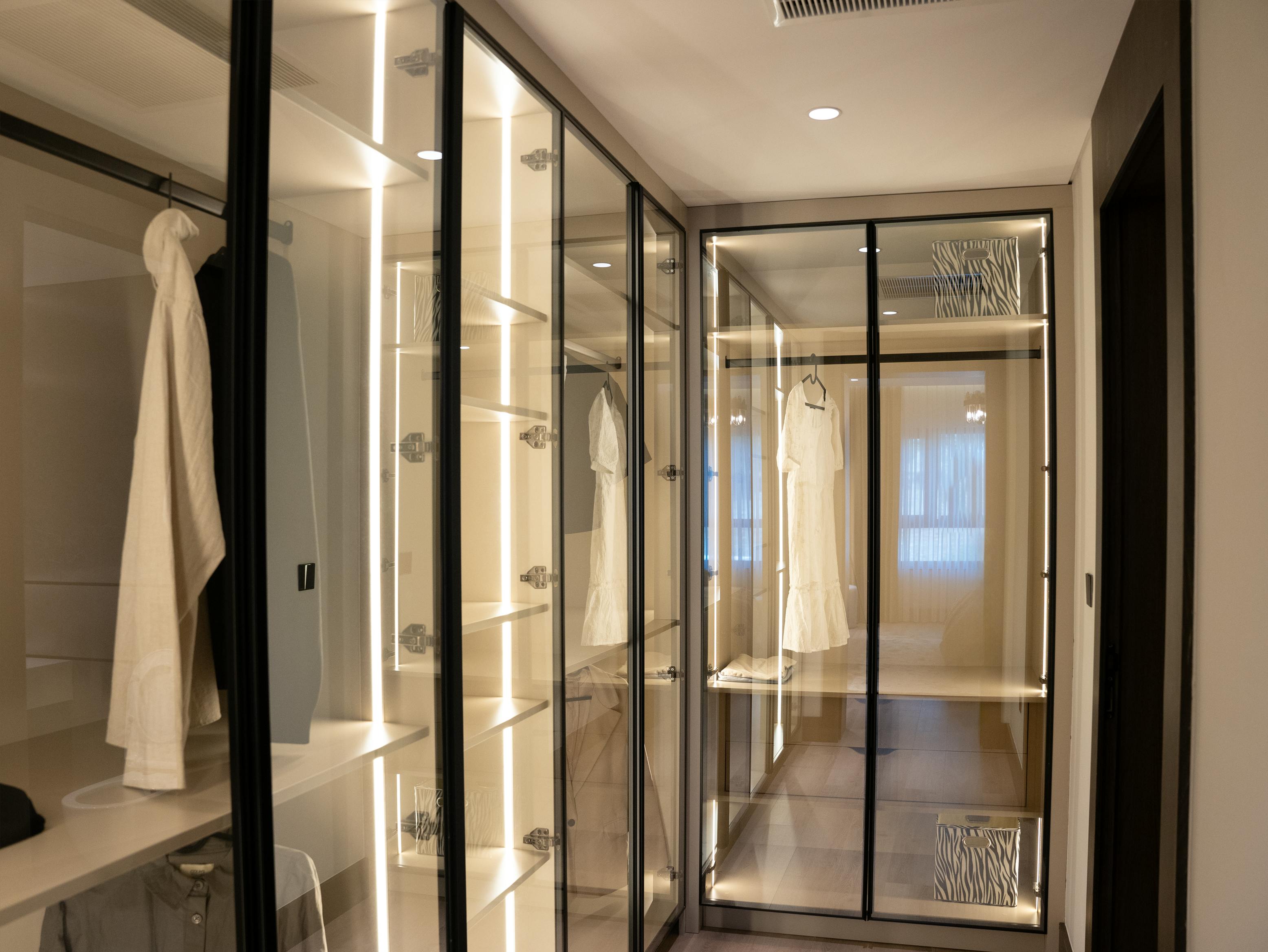
This Photo was taken by Ansar Muhammad.
Artificial intelligence integration represents the next frontier in wardrobe management. AI systems can learn personal style preferences, suggest new combinations based on existing pieces, and even recommend new purchases that complement the existing wardrobe. These systems require sophisticated data infrastructure and processing capabilities.
Virtual and augmented reality technologies are beginning to appear in luxury retail environments and will likely migrate to private dressing rooms. These might allow virtual try-ons, 3D outfit visualization, or even virtual shopping experiences where new pieces can be evaluated in the context of the existing wardrobe.
Sustainability and energy efficiency
Environmental consciousness increasingly influences luxury design decisions. Energy-efficient LED lighting systems, smart climate controls that optimize energy usage, and sustainable materials all contribute to reduced environmental impact without compromising luxury or functionality.
Some advanced systems include energy monitoring that tracks usage patterns and suggests optimizations. Integration with renewable energy systems like those found in luxury rooftop garden installations can further reduce environmental impact.
Working with visionary designers to achieve your vision
The complexity of modern luxury dressing room design requires collaboration with specialists who understand both the technical requirements and the aesthetic possibilities. The most successful projects involve teams that include interior designers, technology consultants, and custom millwork specialists.
The design process typically begins with a detailed assessment of the existing wardrobe and lifestyle requirements. This analysis informs decisions about storage needs, technology integration, and spatial planning. Professional designers often spend considerable time understanding how clients actually use their wardrobes to ensure that the final design supports real-world usage patterns.
Budget planning for luxury dressing room transformations must account for both visible elements and hidden infrastructure. Climate control systems, electrical upgrades, and structural modifications can represent significant portions of the overall investment, even though they’re not immediately apparent in the finished space.
Managing the transformation process
Luxury dressing room projects often require months of planning and construction, during which wardrobes must be temporarily relocated and daily routines disrupted. Professional project managers help coordinate the complex sequence of trades and ensure that the work progresses efficiently.
Quality control becomes particularly important given the precision required for custom millwork, technology integration, and climate control systems. Regular inspections and testing ensure that every component functions properly before the client takes occupancy.
Frequently asked questions
What’s the typical investment range for a luxury dressing room transformation?
Professional luxury dressing room transformations typically range from $75,000 to $250,000, depending on size, technology integration, and material selections. The most elaborate installations with full climate control and smart systems can exceed $500,000. The investment includes custom millwork, professional lighting, climate control systems, and technology integration.
How long does a complete dressing room transformation take?
Complete luxury dressing room projects typically require 8 to 16 weeks from design approval to completion. This includes time for custom millwork fabrication, electrical and HVAC modifications, and technology system installation. Complex projects with structural changes or extensive technology integration may require longer timelines.
Can smart closet systems be added to existing dressing rooms?
Many smart closet technologies can be retrofitted into existing spaces, though the extent depends on current electrical infrastructure and storage configurations. Basic inventory management systems and smart lighting can often be added with minimal disruption, while comprehensive climate control and motorized storage systems may require more extensive modifications.
What maintenance do climate-controlled dressing rooms require?
Climate-controlled systems require regular filter changes, annual professional inspections, and periodic calibration of sensors and controls. Most systems include monitoring capabilities that alert users to any issues. Professional maintenance contracts typically cost $2,000 to $5,000 annually but help ensure optimal performance and longevity.
How do smart inventory systems handle privacy and security?
Reputable smart closet systems employ encryption and local data storage to protect privacy. Many systems operate entirely within the home network without transmitting personal information externally. For maximum security, some installations include dedicated networks that isolate closet systems from other smart home devices and internet connections.
What’s the return on investment for luxury dressing room transformations?
Well-executed luxury dressing rooms typically recover 60 to 80 percent of their cost in home value, similar to other high-end interior improvements. In luxury markets, exceptional dressing rooms can become significant selling points that differentiate properties from comparable listings. The personal value – time savings, garment preservation, and daily enjoyment – often justifies the investment regardless of resale considerations.
The future of personal style sanctuaries
The transformation of luxury dressing rooms represents more than just improved storage – it’s a fundamental reimagining of how we interact with our personal style and daily routines. These spaces have evolved from simple closets into sophisticated sanctuaries that rival the world’s finest boutiques in both aesthetics and functionality.

This Photo was taken by Max Vakhtbovych.
The integration of smart technology, climate control, and boutique-inspired design creates environments that not only protect valuable wardrobes but actively enhance the experience of personal style. These systems learn preferences, anticipate needs, and eliminate the daily frustrations that can diminish the joy of getting dressed.
Perhaps most importantly, these transformations recognize that our relationship with clothing extends far beyond mere function. The ritual of dressing sets the tone for each day, and the environment in which that ritual takes place profoundly affects our confidence, creativity, and overall well-being. When that environment rivals the world’s finest retail spaces in both beauty and sophistication, it elevates every interaction with our personal style.
The visionary designers creating these spaces understand that true luxury lies not in ostentation but in the seamless integration of beauty, function, and technology in service of daily life. They’re creating sanctuaries that honor both the practical needs of wardrobe management and the deeper human desire for spaces that inspire and delight. As technology continues to evolve and our understanding of wellness expands to include our physical environments, these personal styling sanctuaries will only become more sophisticated and more essential to the luxury lifestyle.
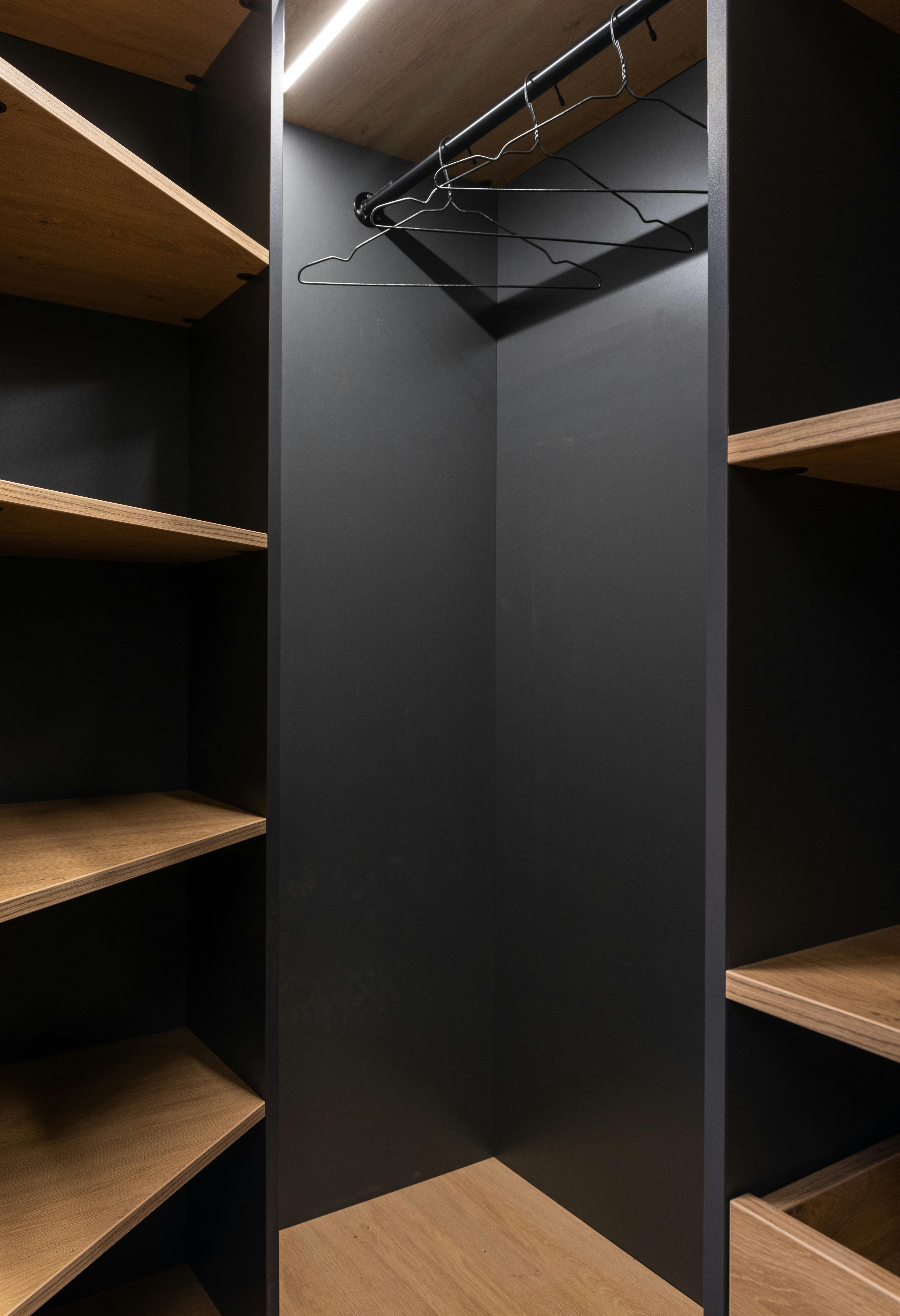
This Photo was taken by Max Vakhtbovych.
The investment in creating these spaces pays dividends every single day through improved organization, garment preservation, and the simple pleasure of beginning each morning in an environment designed specifically for the celebration of personal style. For those ready to elevate their daily routines and protect their wardrobe investments, there has never been a better time to explore the possibilities of a truly transformative dressing room sanctuary.