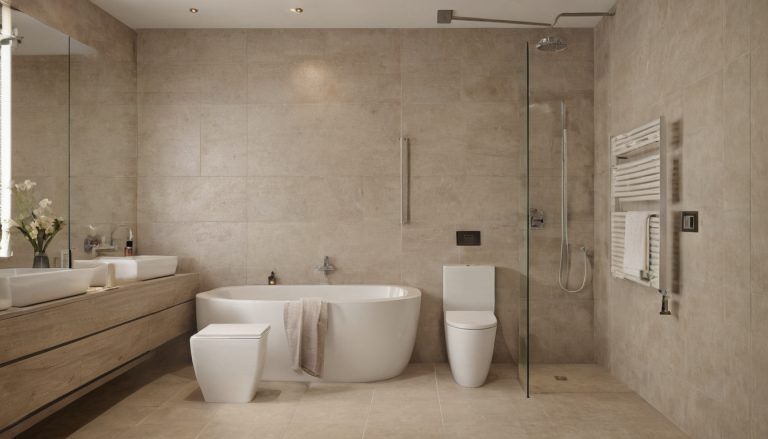
The lowest bathroom bid can become the most expensive document in the house if it omits the work that protects stone, waterproofing, glass, stairs, closets, and finished rooms around the bath. A luxury bathroom remodel should be awarded as a controlled risk package, not as a beauty contest between polished proposals.
A luxury bathroom contractor bid is only comparable when the scope, drawings, exclusions, and finish assumptions match
A luxury bathroom contractor bid cannot be judged by total price until each proposal includes the same room boundaries, demolition limits, plumbing changes, electrical work, waterproofing assemblies, stone handling, glass scope, and finish schedule.
A bathroom remodel scope matrix should separate contractor work, owner purchases, designer selections, and specialist trades
A primary bath bid needs a drawing and specification set before the number means much: existing and proposed plans, demolition notes, reflected ceiling and lighting plans, plumbing and electrical locations, ventilation changes, tile and stone layouts, glass intent, millwork drawings, finish schedule, and product selections. In the United States, licensing and permit thresholds vary by state, so the bid package should name the project address and expected permit scope rather than assume one national rule.
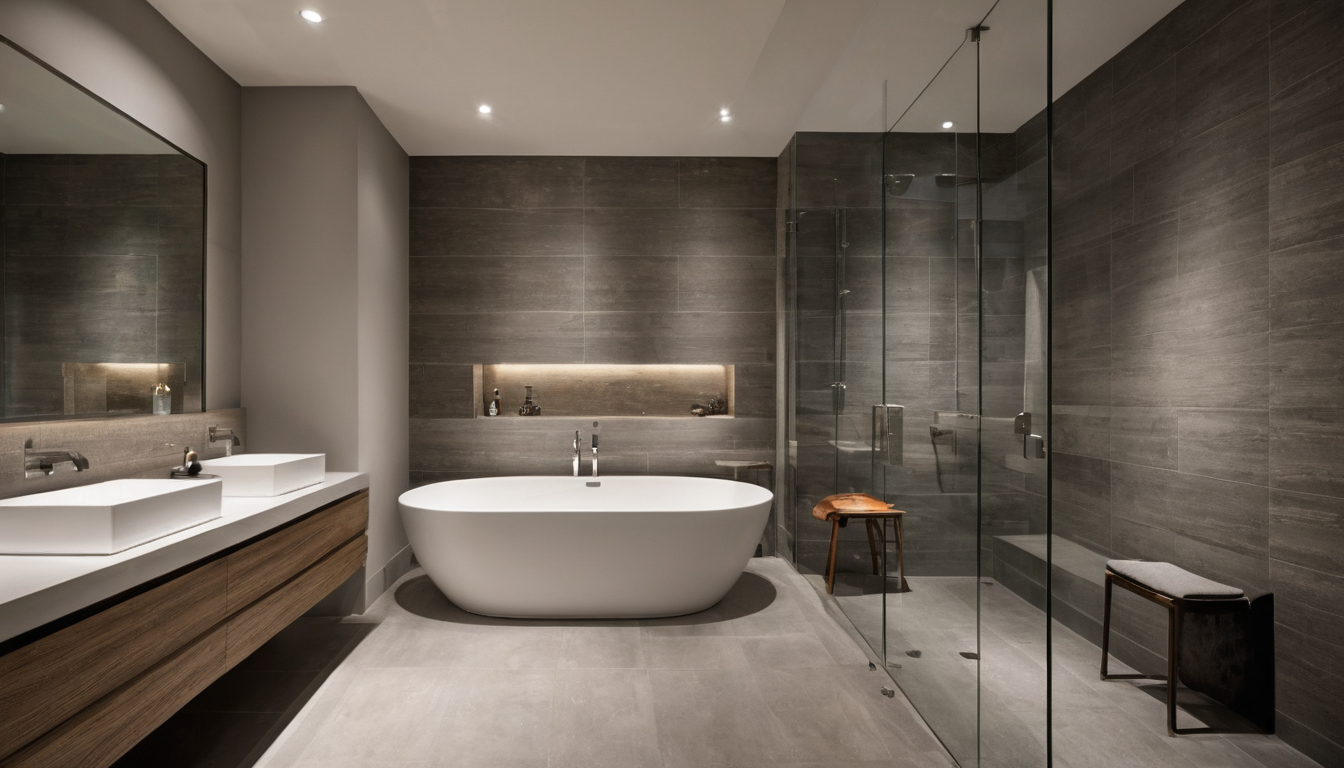
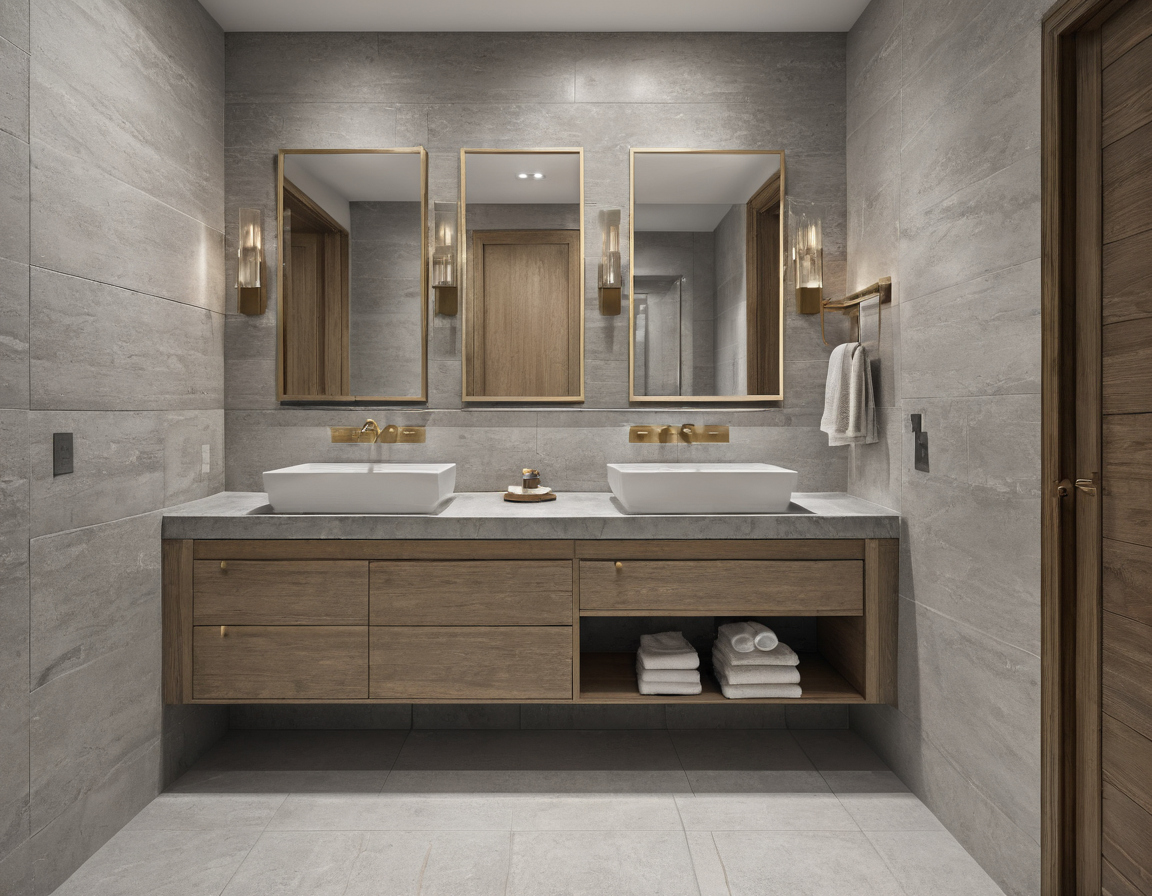
A luxury bathroom contractor bid is only comparable when the scope, drawings, exclusions, and finish assumptions match shown as an editorial reference for proportion and finish coordination.
| Bid item | What must be specified | What a weak proposal hides |
|---|---|---|
| Demolition | Exact walls, floors, ceilings, tub decks, mirrors, slabs, and built-ins to be removed | Rotten framing, concealed plumbing, substrate repair, disposal, elevator protection, and dust control |
| Plumbing and electrical | Relocated lines, valve access, heated floor power, sconces, outlets, controls, and permit responsibility | Change orders after fittings, mirrors, and lighting are selected |
| Waterproofing | Membrane type, drain coordination, substrate, flood test where required, and responsible trade | Gaps between plumber, tile installer, slab installer, and general contractor |
| Stone and tile | Tile format, slab count, edge details, bookmatching intent, setting materials, waste, sealing, and protection | Builder-grade labor assumptions behind a premium stone design |
| Glass and millwork | Templating, blocking, hardware finish, door swing, vanity shop drawings, and installation sequence | Late field conflicts at benches, niches, towel bars, and cabinet fillers |
| Final cleaning and air quality | Ventilation during finish work, cleaning products, floor protection removal, and closeout standards | Residue on marble, dust in closets, and chemical odors after handover |
Bathroom contractor exclusions must be read before the price, not after the interview
Exclusions are the quietest part of a polished proposal. A bid that excludes permits, concealed damage, slab leveling, rotten framing, hazardous materials, freight, parking, crane time, design revisions, final cleaning, or protection of adjacent finishes may look disciplined while pushing real bath costs outside the contract.
Licensing language also belongs near the front of the comparison. The California Contractors State License Board states that businesses or individuals who construct or alter covered structures must be licensed when a permit is required, additional workers are used, or the total project contract cost is $1,000 or more, unless an exemption applies. The same California source states that asbestos or other hazardous-substance work is regulated by federal OSHA, California DOSH, and CSLB, and that new license applicants must complete an asbestos open-book examination before licensure if not previously completed. If a proposal treats hazardous material discovery as a vague owner problem, the low price has already stopped being comparable.
Timing can distort comparison as much as price. In Washington, a completed contractor registration submitted by mail must include an original, signed, notarized application, and Washington Labor and Industries currently describes processing as 3 to 4 weeks after receipt when complete. A luxury bath schedule should not depend on a contractor becoming properly active after the award.
Premium bathroom bids need finish assumptions tied to model numbers, slab counts, and installation standards
Finish assumptions turn a bathroom proposal from a guess into a procurement document. Wall-mounted fittings, large-format porcelain, bookmatched stone, low-iron glass, heated floors, recessed medicine cabinets, dimming systems, and custom metalwork all change blocking, substrate preparation, sequencing, and specialist labor. A bid that says “tile included” or “fixtures by owner” has not priced the bathroom the client is actually expecting.
Material behavior should also appear in the scope. The Natural Stone Institute warns that scouring powders or creams can scratch natural stone because those products contain abrasives, which matters when a contractor specifies final cleaning and handover care for honed limestone or polished marble. The U.S. Environmental Protection Agency identifies paints, varnishes, waxes, cleaning products, building materials, and furnishings as common indoor sources of volatile organic compounds, and recommends increased ventilation when VOC-emitting products are used indoors.
Contract form assumptions deserve the same discipline. The ConsensusDocs comparison matrix lists ConsensusDocs 200.4 as a Dispute Review Board addendum specification for dispute procedures, which is a reminder that dispute process, exclusions, and scope clarity should be selected before the first wall is opened. Once the base scope is equalized, the next distortion appears in bathroom remodel allowances when stone, fittings, glass, lighting, and specialty labor are underpriced.
Bathroom remodel allowances can distort a luxury bath budget when stone, fittings, glass, lighting, and specialty labor are underpriced
Allowances are useful only when they reflect the actual quality level, quantity, freight, tax, lead time, and labor complexity of the intended bathroom. In luxury remodels, low allowances for stone, plumbing fittings, lighting, glass, millwork, hardware, and tile labor often shift major costs out of the bid and into change orders.
A luxury bath allowance table should list quantity, quality tier, tax, freight, waste, installation, and decision deadline
A primary bath allowance is not a decoration placeholder. It is a procurement instruction, and a weak instruction lets the contractor price a room that does not match the drawings.
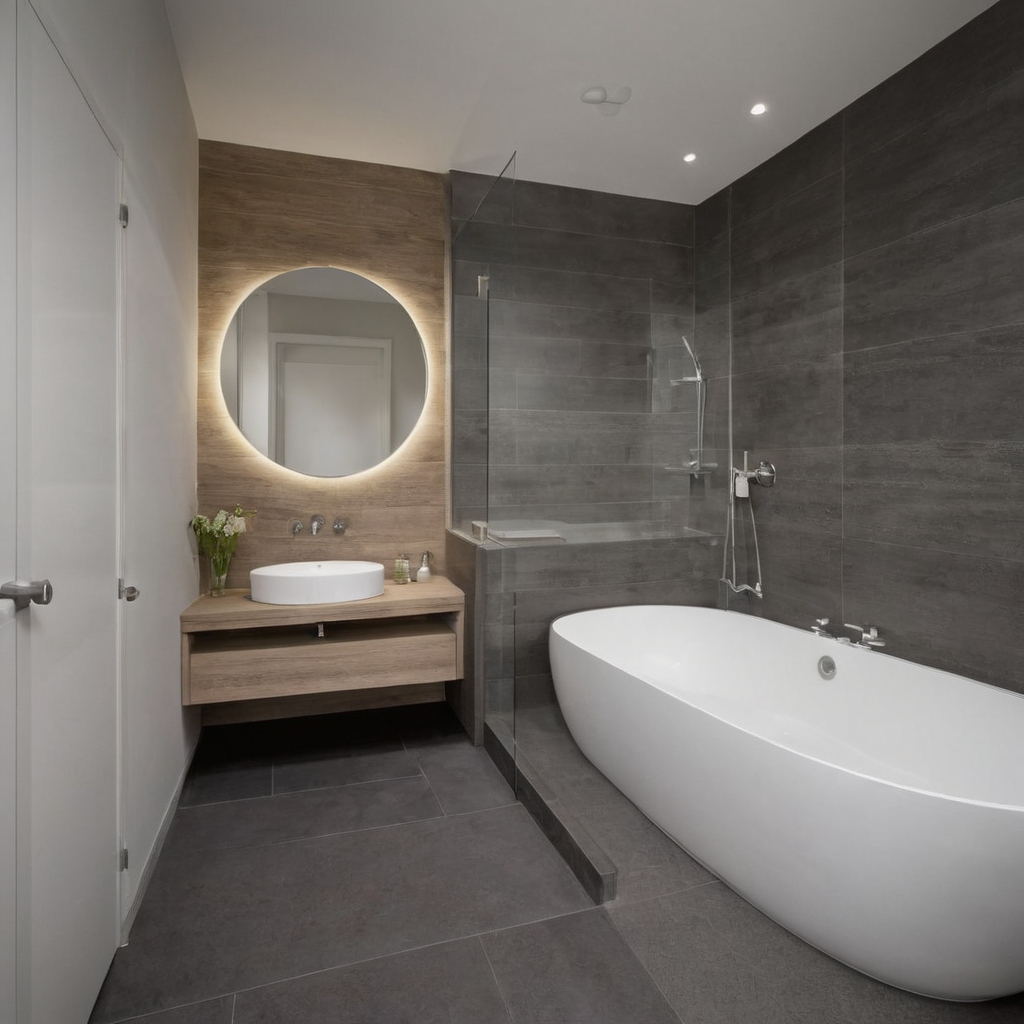
Bathroom remodel allowances can distort a luxury bath budget when stone, fittings, glass, lighting, and specialty labor are underpriced shown with floor, wall, and fixture relationships visible.
- Stone and tile: require slab count or tile quantity, finish, edge profile, waste assumption, setting material, sealing responsibility, delivery, tax, freight, and whether the figure includes fabrication and installation.
- Plumbing fittings: list the number of valves, trims, diverters, body sprays, tub fillers, drains, supply lines, rough-in parts, finish, and whether the allowance includes plumber labor.
- Lighting and mirrors: separate decorative fixtures, recessed lighting, drivers, dimmers, illuminated mirrors, medicine cabinets, electrical labor, and switching revisions.
- Glass and metalwork: identify shower glass thickness intent, door swing, hardware finish, notches, templates, delivery, installation, and responsibility for penetrations through finished stone or tile.
- Millwork and hardware: define vanity construction, drawer inserts, specialty finishes, pulls, hinges, medicine storage, and installation scribing against uneven walls.
- Decision deadline: state the date selections must be approved so tile layout, rough-in, slab fabrication, and glass templating do not stall the schedule.
Low plumbing and stone allowances are warning signs when the design includes wall-mounted fittings, bookmatched slabs, or custom shower glass
Wall-mounted faucets, thermostatic controls, body sprays, freestanding tubs, linear drains, slab shower walls, and frameless glass require more coordination than basic fixture swaps. A bid that treats these items as generic material allowances hides rough-in labor, blocking, access panels, waterproofing coordination, templates, polishing, mitered edges, and return visits.
Bookmatched stone creates a sharper risk because the design depends on exact slab selection and layout. If the allowance covers only a nominal tile or stone purchase, the owner may later pay separately for additional slabs, rejected veining, freight, fabrication, niche returns, thresholds, curb pieces, and protection during installation.
A realistic bathroom remodel contingency is separate from allowances and should not hide poor scope definition
A contingency should cover concealed conditions, such as damaged framing, hidden moisture, outdated rough-ins, or substrate repairs discovered after demolition. A contingency should not be the place where an underpriced tub filler, missing glass hardware, or unselected slab package quietly lands after the contract is signed.
Small-dollar language deserves special care. In California, the Contractors State License Board says license exemptions may apply only where no building permit is required, no employee labor is used, and the combined value of labor, materials, and all other costs is less than $1,000; the same guidance says work on a larger project may not be split into smaller amounts to meet the exemption, according to the California Contractors State License Board. A luxury bath should be priced as one coordinated scope, not as scattered allowances that blur who is qualified, insured, and responsible.
Once the allowance schedule exposes what the price does and does not buy, the next risk is whether the bathroom remodel contractor is properly verified for licensing, insurance, supervision, and specialist trade control before selection.
A bathroom remodel contractor should be verified for licensing, insurance, supervision, and specialist trade control before selection
A luxury bathroom contractor should be evaluated as a risk manager, not only as a builder. For high-value homes, the homeowner or project manager should verify regional licensing, insurance, workers compensation, subcontractor qualifications, jobsite supervision, and prior experience with stone, waterproofing, glass, radiant heat, and occupied-home construction.
Bathroom contractor license checks should match the project address, trade scope, and contract value
A primary bath with wall-mounted valves, heated floors, slab stone, new lighting, and custom glass is not a single-skill project. The license review should start with the project address, then test whether the contractor’s license covers the contract value and the type of work being sold.
- License jurisdiction: Check the official board for the state or region where the home sits. The California Contractors State License Board states that covered contractors, including subcontractors, specialty contractors, and home improvement contractors, must be licensed before submitting bids, subject to stated exceptions.
- License class and value limit: The North Carolina Licensing Board for General Contractors organizes licenses by limitation and classification, with the limitation controlling project dollar size and the classification controlling work type. North Carolina lists limited licenses for individual projects up to $750,000, intermediate licenses up to $1,500,000, and unlimited licenses with no dollar cap.
- Work classification: The Virginia Department of Professional and Occupational Regulation explains that contractor licenses include a class, which determines monetary value, and a classification or specialty, which determines permitted work type.
- Trade-specific work: Washington L&I recognizes general and specialty contractor classifications, and Washington identifies plumbing, electrical, elevators, boilers, and asbestos work as activities with additional education, examination, and licensing requirements.
Insurance certificates should name the project risks, not just prove that a policy exists
A certificate of insurance is useful only if it matches the bathroom remodel risk. A villa bath above a finished dining room, a marble stair hall, or a furnished primary suite needs coverage review for water damage, worker injury, subcontractor activity, vehicles, and high-value finishes.
- General liability: Ask for a current certificate with the exact legal business name. Washington L&I requires a contractor’s bond and insurance to use the exact business name, and Washington requires L&I to be listed as certificate holder for contractor registration.
- Bond and liability minimums: Washington contractor registration requires a continuous contractor surety bond of $30,000 for general contractors or $15,000 for specialty contractors, plus general liability insurance of either $200,000 public liability with $50,000 property damage or a $250,000 combined single limit.
- Workers compensation: North Carolina states that workers compensation is not a general contractor licensing requirement, but North Carolina state laws require workers compensation insurance where applicable. Do not treat a license as proof that employee injury risk is covered.
- Subcontractor coverage: Require certificates from plumbers, electricians, glass installers, stone fabricators, and radiant-floor installers when those trades contract separately or enter the home under the general contractor’s supervision.
A named site supervisor matters when the bathroom is inside an occupied luxury home
A named supervisor is the person who turns a polished bid into controlled daily work. The interview should identify who opens the house, who checks substrate conditions before tile, who coordinates inspections, who protects the dressing room threshold, and who stops work when moisture or mold risk appears. The U.S. Environmental Protection Agency advises that wet or damp spots should be fixed promptly to prevent mold growth, which makes supervision a health and finish-protection issue, not just scheduling.
- Trade control: Ask whether the contractor hires and coordinates multiple specialties or only performs a specialty. Washington distinguishes general contractors, who can hire subcontractors in multiple specialties, from specialty contractors, who may work only in their registered specialty and cannot hire subcontractors.
- Verification tools: Use official lookup systems before selection. California CSLB provides License Check, Virginia DPOR provides License Lookup, North Carolina identifies License Search, and Washington L&I provides a Verify a Contractor, Tradesperson, or Business tool that can show whether registration, bond, and liability information are current or suspended.
- Daily authority: Require the proposal to name the site supervisor, backup supervisor, inspection coordinator, and person authorized to approve substrate preparation, dust containment, water shutoffs, and protection changes.
Once the license, insurance, trade-control, and supervision risks are visible, the next question becomes sharper: waterproofing responsibility must be assigned to one accountable bathroom remodel contractor before demolition begins.

A bathroom remodel contractor should be verified for licensing, insurance, supervision, and specialist trade control before selection shown as an editorial reference for proportion and finish coordination.
Waterproofing responsibility must be assigned to one accountable bathroom remodel contractor before demolition begins
In a premium bathroom, waterproofing failure usually costs more than the visible finish that hides it. The contract should identify the approved assembly, responsible installer, inspection points, flood-test requirements where applicable, drain compatibility, heated-floor coordination, and manufacturer instructions for membranes, setting materials, linear drains, and custom glass penetrations.
The bathroom contractor should submit the waterproofing assembly before tile or stone is priced as final
A luxury shower wall finished in bookmatched stone is not ready for final pricing until the hidden assembly is named. The contractor should submit the membrane type, backer board or substrate, drain flange, sealant, setting material, waterproofing transitions, niche treatment, curb or curbless threshold method, and any required flood test before tile, slab, or mosaic labor is treated as fixed.
The diagnostic question is simple: who owns the waterproofing system if the plumber, tile installer, radiant heat installer, stone fabricator, and glass contractor each touch it? A weak bid says “waterproof shower included.” A controlled bid says which trade installs each layer, who checks compatibility, who documents the work before it is covered, and who corrects a failed inspection or test.
The bathroom contractor should also identify the governing standard or instruction set for wet-area tile work. For a premium bath, that usually means referencing the applicable tile and waterproofing assembly method, local inspection requirements for shower receptors and plumbing alterations, and the selected manufacturers’ installation instructions. If the bid mixes a membrane from one system with a drain, mortar, board, or sealant from another, the contractor should state who has verified warranty compatibility.
Linear drains, heated floors, slab walls, and frameless glass create coordination risks that should appear in the bid
A linear drain changes more than the drain cover. Linear drain placement affects the membrane connection, slope method, grate height, tile layout, slab cuts, and the sequence of plumbing inspection before finished surfaces close the floor. If the bid treats the drain as a plumbing allowance only, the labor risk has been hidden in the wrong category.
Heated floors add another coordination layer because heating cables, sensors, membranes, and setting materials must be sequenced without damaging waterproofing. The bid should say whether heated flooring stops outside the wet zone, continues into a shower area only with approved components, or requires a separate substrate build-up that affects thresholds and door clearances.
Slab walls and frameless glass also need early decisions. A stone slab shower may require blocking, template timing, panel handling, and carefully planned penetrations for valves, brackets, hinges, or shelves. A frameless glass enclosure should not be allowed to become the first moment anyone discusses whether hardware fasteners pierce waterproofed surfaces. The contractor’s proposal should assign that coordination before demolition, not after the glass templater arrives.
Wet-room technical details can be reviewed separately once the contractor shortlist is qualified
Contractor selection should not turn the homeowner into the waterproofing designer. The client’s role is to require a documented assembly, compatible components, named responsibility, inspection access, and a process for resolving conflicts before the finish package is released. Standard contract families can help structure that responsibility; ConsensusDocs provides a comparison matrix that identifies standard ConsensusDocs contract documents equivalent to AIA forms where applicable.
After the contractor shortlist is narrowed, technical wet-room planning can move into slope, drain placement, stone slip performance, and bench clearances. For that next layer of design review, see wet-room slope, drain, stone slip-rating, and bench-clearance planning. Once waterproofing accountability is visible, the next hidden risk is whether the contractor can protect the occupied house while the bathroom is opened, cut, carried, and rebuilt.
Waterproofing responsibility must be assigned to one accountable bathroom remodel contractor before demolition begins shown with finish, fixture, and clearance relationships visible.
Site protection standards should be written into the bathroom remodel contract for occupied luxury homes
Site protection should be a contract requirement when the bathroom remodel sits inside a furnished home with marble floors, finished stairs, millwork, art, elevators, or adjacent bedrooms. The contractor’s plan should cover access routes, dust containment, negative air where appropriate, silica control, floor protection, daily cleaning, moisture checks, and security protocols.
Bathroom demolition and tile cutting require a dust and silica control plan, not just plastic sheeting
Bathroom demolition releases fine debris from tile, mortar, drywall, backer board, grout, and setting materials. A credible proposal should describe sealed work-zone barriers, zipper access, HEPA-filtered extraction or air scrubbing where the site conditions require it, wet cutting or off-site cutting where practical, and tool-connected dust collection for interior cuts.
Plastic sheeting alone does not protect a bedroom closet, linen cabinet, return-air grille, or polished stone vanity nearby. The procurement consequence is simple: if containment is vague before demolition, the owner usually discovers the weakness after dust has moved through fabrics, vents, drawers, and finished surfaces.
Protection routes should cover stairs, foyers, elevators, hallways, and bedroom thresholds before trades arrive
The access route should be drawn before the first cart enters the house. Marble foyers need breathable temporary protection, hardwood needs impact and abrasion protection, carpet needs adhesive-safe covering, and elevators need wall, jamb, floor, and control-panel protection. If the bathroom route crosses a feature stair, require the same discipline used for protecting finished staircases and glass rail routes during construction access.
Thresholds, glass rails, lacquered millwork, wallcoverings, and metal trims should be photographed before work starts and checked during weekly walks. Demolition debris, plumbing tools, stone carts, wet boots, and adhesive residue create different risks, so one roll of floor paper is not a protection plan.
Occupied-home rules should specify working hours, bathroom access, water shutoffs, parking, pets, alarms, and daily closeout
Occupied-home rules should be written as operating instructions, not left to courtesy. The contract should identify work hours, parking, elevator use, alarm handling, key control, pet separation, temporary bathroom access, water shutoff notice, daily debris removal, end-of-day vacuuming, and who confirms that valves, windows, and doors are secure.

Site protection standards should be written into the bathroom remodel contract for occupied luxury homes shown as an editorial reference for proportion and finish coordination.
Once protection standards are written clearly, the next risk becomes financial control: payments, change orders, inspections, and holdbacks must follow documented milestones rather than contractor momentum.
Bathroom remodel contract milestones, change orders, inspections, and holdbacks reduce late-stage disputes
A luxury bathroom contract should tie payments to visible, inspectable milestones rather than vague percentages of completion. For high-value remodels, the agreement should define approved selections, change-order pricing, inspection points, waterproofing signoffs, glass templating, punch-list standards, warranty documents, lien releases, and final holdback conditions.
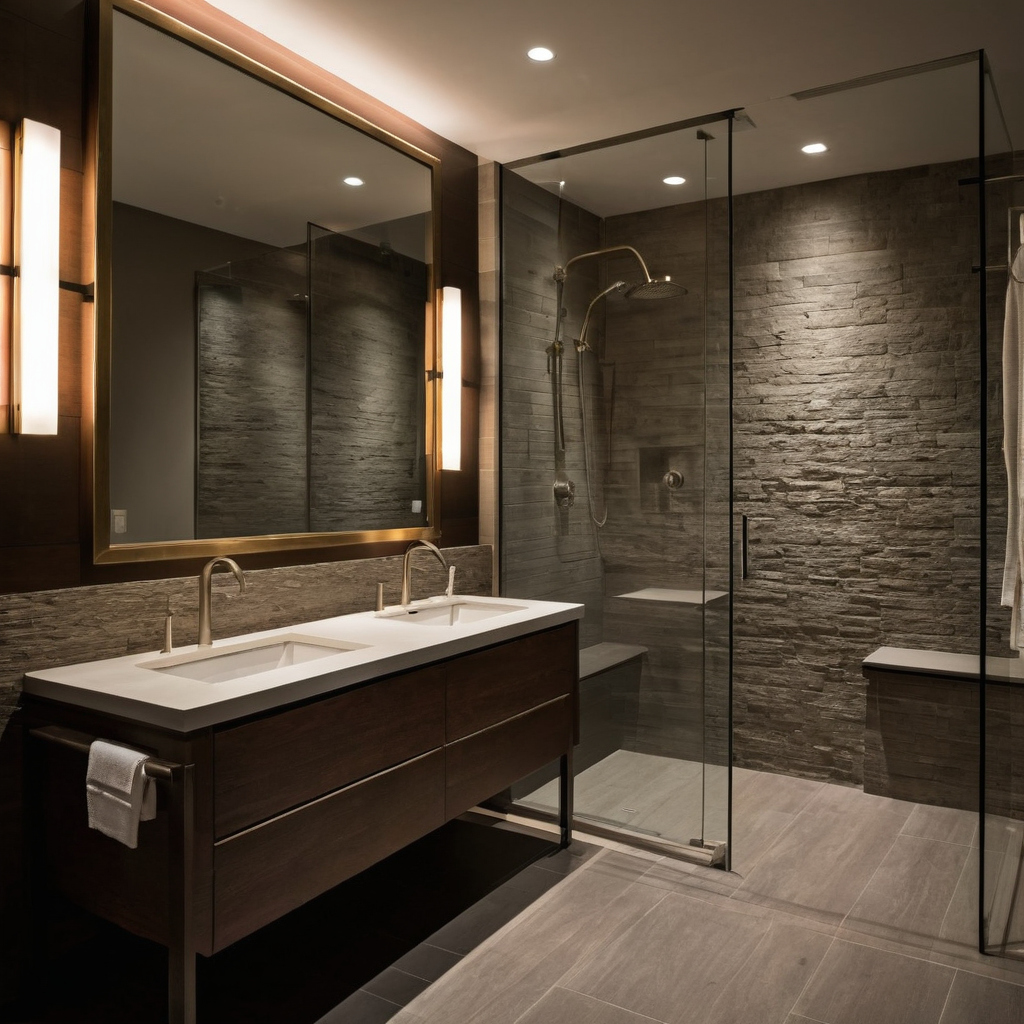
Bathroom remodel contract milestones, change orders, inspections, and holdbacks reduce late-stage disputes shown as an editorial reference for proportion and finish coordination.
A luxury bath payment schedule should follow demolition, rough-in, waterproofing, tile, glass, fixtures, and closeout milestones
A primary bath payment schedule works best when each invoice corresponds to work the owner, designer, architect, or project manager can see. Suitable milestones include completed demolition, corrected framing, plumbing and electrical rough-in, waterproofing approval, tile or stone installation, glass templating, fixture setting, final cleaning, punch-list completion, and closeout delivery.
Model contract documents give useful structure for this discipline. The ConsensusDocs comparison matrix lists ConsensusDocs 200 for a lump-sum owner-constructor agreement as corresponding to AIA A101 plus A201, 2017, and ConsensusDocs 205 for a short-form lump-sum owner-contractor agreement as corresponding to AIA A104, 2017. The same matrix lists payment administration documents tied to applications for payment and schedules of values as corresponding to AIA G702 and G703.
Change orders should identify price, schedule impact, selection responsibility, and approval method before work proceeds
A bathroom change order should not be a text message approving “extra work.” Concealed water damage behind a shower wall, a valve relocation for a wall-mounted fitting, a slab substitution, a lighting revision, or a glass hardware change should state the price, time effect, drawing or selection affected, and who authorized the change.
For construction changes, the ConsensusDocs matrix lists ConsensusDocs 202 Change Order as corresponding to AIA G701, and ConsensusDocs 203 Interim Directed Change as corresponding to AIA G714. The practical lesson is simple: the luxury bathroom contract should have a written path for changes before demolition exposes the first surprise.
Closeout should include warranties, manuals, maintenance instructions, lien releases, and a punch-list standard for premium finishes
Closeout is where a finished bathroom becomes a maintainable asset. The contractor should deliver product manuals, waterproofing and heated-floor documentation, glass hardware care, ventilation instructions, plumbing fixture warranties, lien releases where applicable, inspection records, and a punch list that distinguishes incomplete work from acceptable natural variation in stone or handmade tile.
The ConsensusDocs matrix lists ConsensusDocs 280 Certificate of Substantial Completion as corresponding to AIA G704, 2017, and ConsensusDocs 281 Certificate of Final Completion with no listed AIA equivalent. For natural stone care, the Natural Stone Institute recommends neutral cleaners, stone soap, or mild liquid dishwashing detergent with warm water. Those documents and care rules reveal the larger selection issue: the best bathroom remodel contractor is the one with the least hidden risk, not automatically the lowest or highest price.
The best bathroom remodel contractor is the one with the least hidden risk, not automatically the lowest or highest price
A homeowner comparing bathroom remodel contractors should choose the proposal that best controls scope, supervision, waterproofing, allowances, protection, schedule, and contract administration for the specific home. The safest choice is often the contractor whose bid makes risks visible, prices premium materials honestly, and explains how the room will be protected during work.
A contractor comparison scorecard should weight scope clarity, allowance realism, supervision, waterproofing proof, protection, schedule, and references
A luxury primary bath should not be awarded to the contractor with the most polished interview or the most agreeable number. The final comparison should read like a risk ledger for the room: who has defined the work, who has left judgment calls open, and who has shown how the adjacent bedroom, dressing room, hallway, and finished floors will survive construction.
| Scorecard area | Stronger contractor signal | Weak proposal signal |
|---|---|---|
| Scope clarity | Line-item scope tied to drawings, demolition limits, rough-in work, finish installation, and closeout. | Broad phrases such as complete bathroom remodel without explaining substrates, penetrations, or finish responsibilities. |
| Allowance realism | Allowances identify quality tier, quantity, tax, freight, waste, installation status, and decision deadlines. | Low material-only allowances for stone, fittings, lighting, mirrors, glass, or specialty labor. |
| Supervision | A named supervisor explains site visits, trade sequencing, decision logs, and daily closeout. | The salesperson disappears after signing and supervision is described as handled by the crew. |
| Waterproofing proof | The contractor can describe the intended assembly, submittals, drain coordination, and inspection hold points. | Waterproofing is treated as the tile installer’s issue after demolition starts. |
| Protection plan | The proposal names access routes, dust control, floor protection, shutoff procedures, and occupied-home rules. | Protection is reduced to plastic sheeting and general cleanup. |
| Schedule and references | Schedule logic matches lead times for stone, glass, fittings, and inspections, with references from similar occupied homes. | References are unrelated kitchens, vacant houses, or projects with simpler finishes. |
Reference calls should focus on comparable conditions, not personality. Ask whether the contractor remodeled a bath with similar stone, custom glass, wall-mounted fittings, heated floors, or occupied-home constraints. A useful reference can describe how quickly the supervisor answered questions, how change orders were presented, and whether protection stayed in place after the first week.
Homeowners should be transparent about project goals but avoid using an unverified budget as a substitute for a defined scope
Budget conversation should be honest, but not careless. A homeowner should share the desired finish level, planning priorities, known constraints, and any hard financial boundary that affects design choices. A homeowner should not say, “Here is the maximum, design to spend it,” before the scope, drawings, allowances, and exclusions have been tested.
Productive contractor language sounds specific: “The priority is a quiet primary bath with slab walls, excellent dust control, and no damage to the bedroom millwork. Please price the base scope and identify alternates for fittings, stone, and glass.” Risky language sounds vague: “Tell me what you can do for this number,” or “Another contractor was lower, so match that price.” The first statement invites defined options. The second statement invites scope subtraction.
The right contractor will not punish clarity. The right contractor will explain where the budget is strong, where it is exposed, and which decisions must be made before procurement. The final choice should change from selecting a price to selecting a documented construction plan with fewer hidden ways to damage the bath, the schedule, and the surrounding home.
FAQ
How do you pick a bathroom remodel contractor for a luxury primary bath?
Pick a bathroom remodel contractor by comparing documented risk, not personality or price alone. The stronger proposal should include drawings, exclusions, allowances, waterproofing responsibility, site protection, named supervision, insurance documentation, trade coordination, milestone payments, and closeout requirements.
What is the 30% rule in remodeling, and should it apply to a high-end bathroom remodel?
The 30% rule is an informal budgeting idea, not a substitute for a defined bathroom scope. A high-end bathroom with slab stone, wall-mounted fittings, custom glass, radiant heat, and occupied-home protection should be priced from drawings, specifications, allowances, and labor requirements rather than from a broad percentage rule.
What should you not tell a bathroom remodel contractor during the bidding process?
Do not use an untested maximum budget as a replacement for scope definition. Share goals, priorities, constraints, and any true financial boundary, but ask contractors to price the same drawings and allowance structure so comparison does not become an exercise in hidden scope reduction.
Which bathroom remodel allowance categories most often cause cost overruns?
The most vulnerable allowance categories are stone, tile, plumbing fittings, custom glass, lighting, mirrors, millwork, hardware, heated floors, freight, tax, waste, and specialty labor. The risk increases when an allowance covers material only but the project requires fabrication, installation, templates, blocking, rough-in changes, or return visits.
What site protection should a contractor provide when remodeling a bathroom inside an occupied luxury home?
The contractor should provide a written protection plan for access routes, stairs, elevators, hallways, thresholds, adjacent bedrooms, dust containment, daily cleaning, water shutoffs, alarms, pets, parking, key control, and end-of-day security. For premium homes, site protection is part of the work scope, not an informal courtesy.