Imagine walking through a private guest wing that feels like stepping into the presidential suite of the world’s most exclusive hotel. The doors whisper open with biometric recognition, the temperature adjusts automatically to your preferences, and an invisible concierge system anticipates your every need before you voice it. This isn’t fantasy—it’s the new reality of luxury hospitality design in 2026. Today’s ultra-high-net-worth homeowners are transforming their guest accommodations into sophisticated sanctuaries that rival five-star establishments, complete with smart technology architecture and personalized climate systems that redefine what it means to host in style. We’ll explore how visionary designers are creating these extraordinary spaces and the cutting-edge technologies that make them possible.
The evolution of luxury hospitality architecture
The concept of the private guest wing has undergone a dramatic transformation in recent years. Where once a simple guest bedroom sufficed, today’s luxury homeowners are creating comprehensive hospitality environments that span entire wings or floors of their residences. This shift reflects both changing social dynamics and advancing technology capabilities.
According to the 2025 Luxury Home Design Report, 78% of ultra-high-net-worth individuals now prioritize guest accommodation quality as a primary factor in home design decisions. The average investment in luxury guest wings has increased by 240% since 2020, with homeowners allocating between $500,000 and $2.5 million for complete transformations.
This Photo was taken by Eugenia Remark.
The driving force behind this evolution stems from the understanding that exceptional hospitality creates lasting impressions and strengthens relationships. Just as luxury hotels compete on experience rather than mere accommodation, private homes now offer comparable—and often superior—amenities through thoughtful architectural planning and technological integration.
Redefining spatial hierarchy and flow
Modern guest wing design prioritizes seamless transitions between private and social spaces. Designers create buffer zones that allow guests to feel connected to the main residence while maintaining complete autonomy. This typically involves strategic placement of private library sanctuaries or quiet sitting areas that serve as transitional spaces.
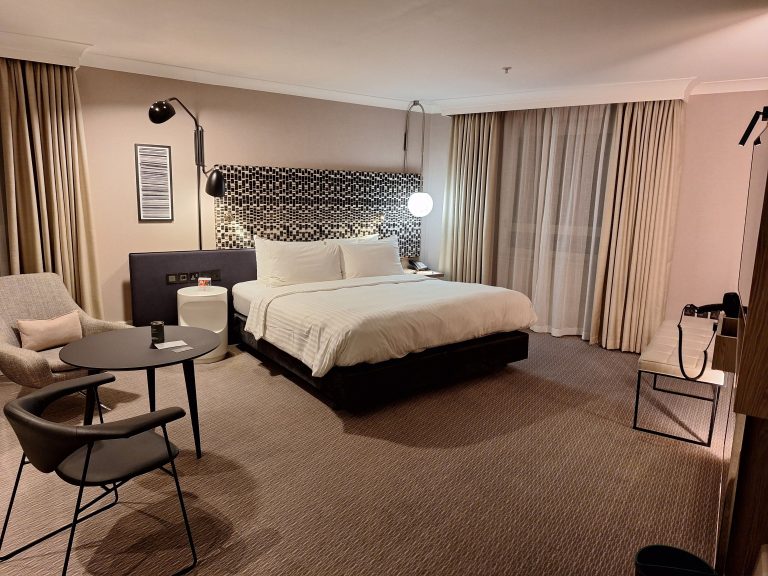
The architectural flow often mirrors high-end hotel suites, with distinct zones for sleeping, working, relaxing, and entertaining. However, unlike commercial hospitality spaces, private guest wings can incorporate more personalized elements and flexible configurations that adapt to different guest preferences and visit durations.
Smart concierge service architecture integration
The backbone of modern luxury guest wings lies in their invisible technology infrastructure. Smart concierge systems represent the convergence of artificial intelligence, Internet of Things devices, and predictive analytics to create anticipatory service experiences that surpass traditional hotel offerings.
Leading technology integration firms report that comprehensive smart concierge systems now incorporate over 200 connected devices per guest suite, ranging from environmental sensors to biometric access controls. These systems learn from guest behaviors and preferences to create increasingly personalized experiences with each visit.
| Smart Concierge Feature | Implementation Cost | Guest Satisfaction Impact |
|---|---|---|
| Biometric Access Control | $15,000-$25,000 | 92% positive response |
| Predictive Climate Management | $30,000-$50,000 | 96% positive response |
| Automated Lighting Orchestration | $20,000-$35,000 | 88% positive response |
| Voice-Activated Room Service | $10,000-$18,000 | 94% positive response |
| Personalized Entertainment Systems | $40,000-$75,000 | 91% positive response |
Predictive environmental orchestration
The most sophisticated guest wings employ machine learning algorithms that analyze patterns in guest behavior, seasonal preferences, and even circadian rhythm optimization. These systems begin adjusting environments hours before guest arrival, ensuring optimal temperature, humidity, air quality, and lighting conditions.

This Photo was taken by cottonbro studio.
Integration with external data sources—weather forecasts, travel schedules, health metrics from wearable devices—allows these systems to make nuanced adjustments. For instance, if a guest’s flight is delayed, the system automatically adjusts meal preparation timing and room preparation schedules accordingly.
Personalized climate-controlled comfort systems
Climate control in luxury guest wings extends far beyond simple temperature regulation. Today’s systems manage micro-climates within different zones of the suite, adjusting not only temperature but also humidity, air circulation patterns, and even scent profiles to create optimal comfort conditions.
Advanced HVAC systems now incorporate individual zone controls that can maintain different temperatures in sleeping, living, and bathroom areas simultaneously. This level of control allows guests to experience their preferred sleeping temperature while maintaining comfortable conditions in social spaces.
Biometric comfort optimization
Cutting-edge installations include biometric monitoring systems that track guest vital signs and stress indicators to automatically adjust environmental conditions. These systems can detect when someone is entering deep sleep phases and subtly lower temperatures to optimize rest quality, or recognize stress indicators and adjust lighting and air circulation accordingly.
The integration of these systems with smart sleep technology architecture creates an unprecedented level of personalized comfort that adapts in real-time to guest needs.
Air purification and wellness integration
Modern climate systems incorporate medical-grade air filtration, UV sterilization, and negative ion generation to create healthier indoor environments. Some installations include aromatherapy integration systems that can introduce subtle scents based on guest preferences or time of day, similar to high-end spa environments.
This Photo was taken by Moussa Idrissi.
Presidential suite design philosophy
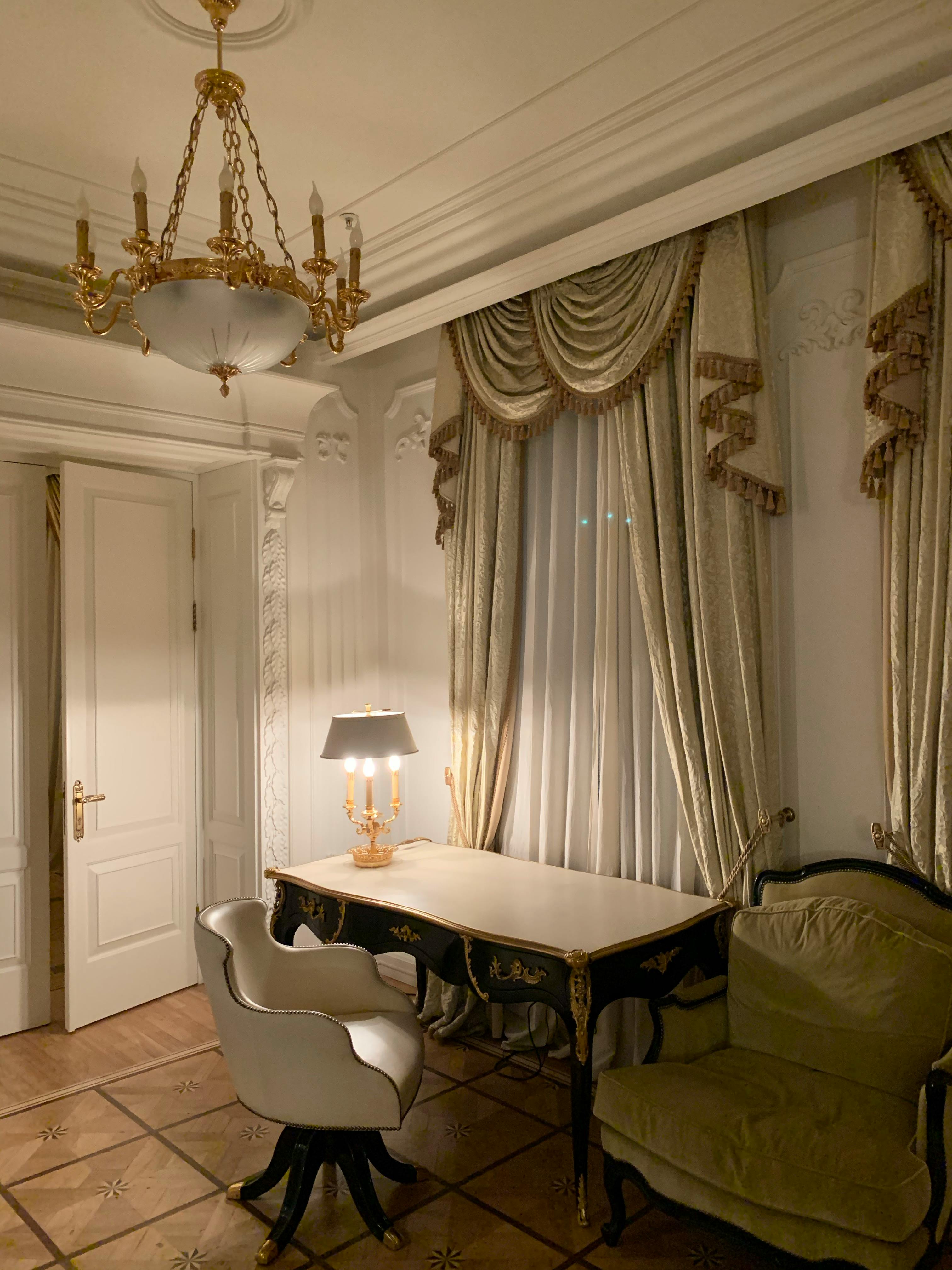
The design principles that govern presidential suite aesthetics focus on understated luxury, impeccable craftsmanship, and seamless functionality. These spaces avoid ostentatious displays in favor of refined elegance that speaks to sophisticated tastes.
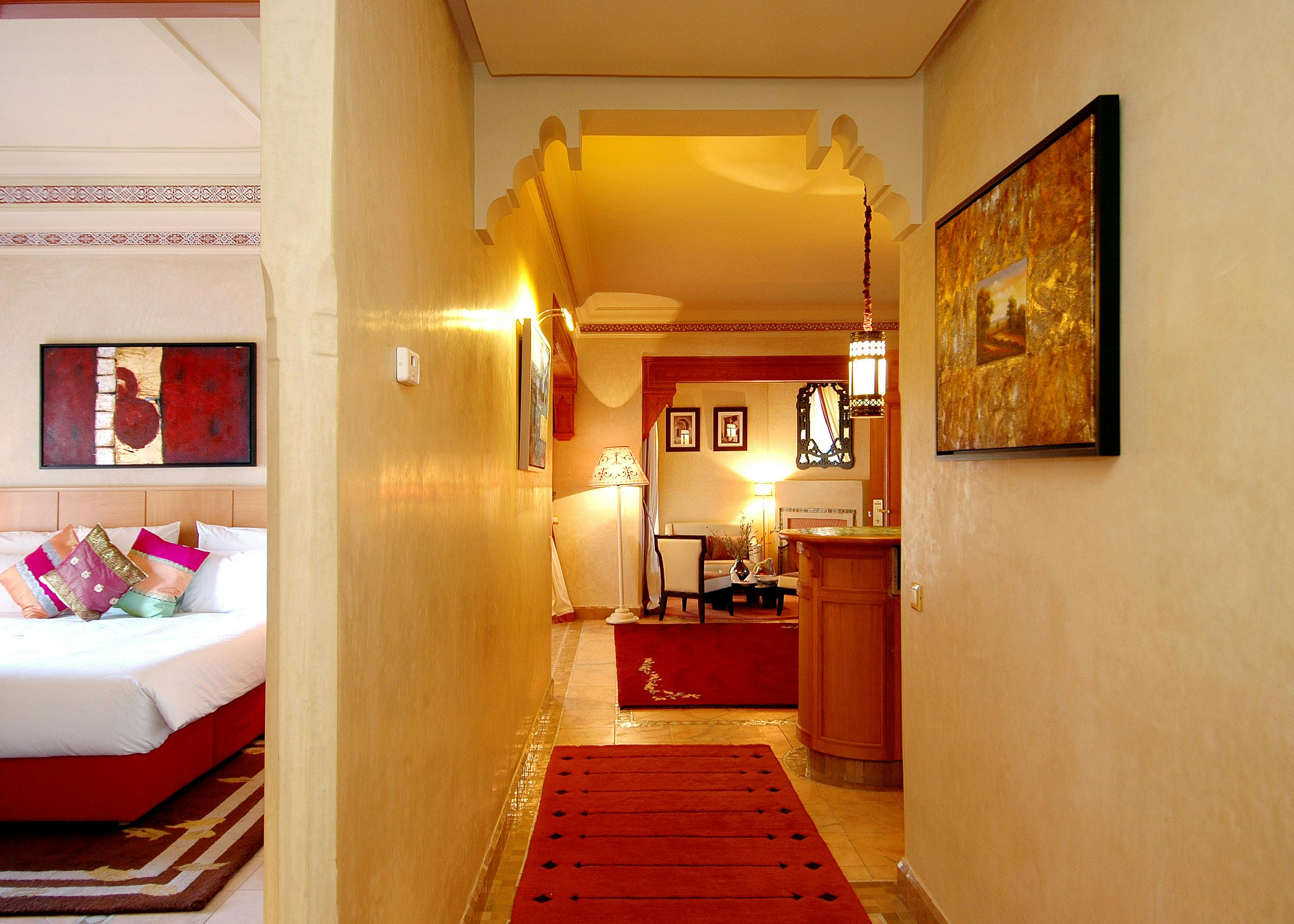
Color palettes typically feature neutral foundations with carefully curated accent pieces that can be easily refreshed. Natural materials—fine woods, stone, quality textiles—create tactile richness while maintaining timeless appeal. The key lies in balancing luxury with livability, ensuring spaces feel welcoming rather than museum-like.
Flexible space configuration
Presidential suite-inspired guest wings incorporate movable elements and adaptable layouts that can transform based on guest needs. This might include retractable walls that can open private spaces to create larger entertaining areas, or furniture systems that can be reconfigured for different activities.
The design often incorporates multiple seating arrangements—intimate conversation areas, formal dining settings, casual reading nooks—allowing guests to choose environments that match their moods and activities. This flexibility ensures the space feels personalized rather than predetermined.
Technology integration aesthetics
Successful presidential suite designs hide technology infrastructure while maintaining easy access to controls. This requires careful planning during the architectural phase to accommodate wiring, sensors, and control systems within walls and furniture pieces.
Control interfaces blend seamlessly with the design aesthetic, often incorporated into custom millwork or disguised as decorative elements. The goal is to provide sophisticated technological capabilities without visual clutter or complexity that might intimidate guests.
Comprehensive amenity ecosystem development
Modern luxury guest wings function as complete hospitality ecosystems, incorporating amenities that address every aspect of guest comfort and convenience. This holistic approach ensures guests never feel they lack anything they might find in the world’s finest hotels.
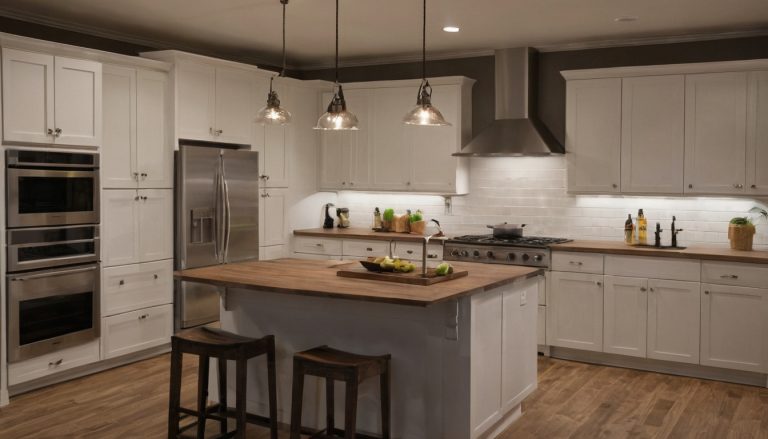
The amenity planning process begins with understanding the specific types of guests the space will serve—business travelers, family visitors, extended-stay guests—and then designing comprehensive solutions for each use case. This might involve incorporating executive office functionality for business guests or family-friendly entertainment systems for multi-generational visits.
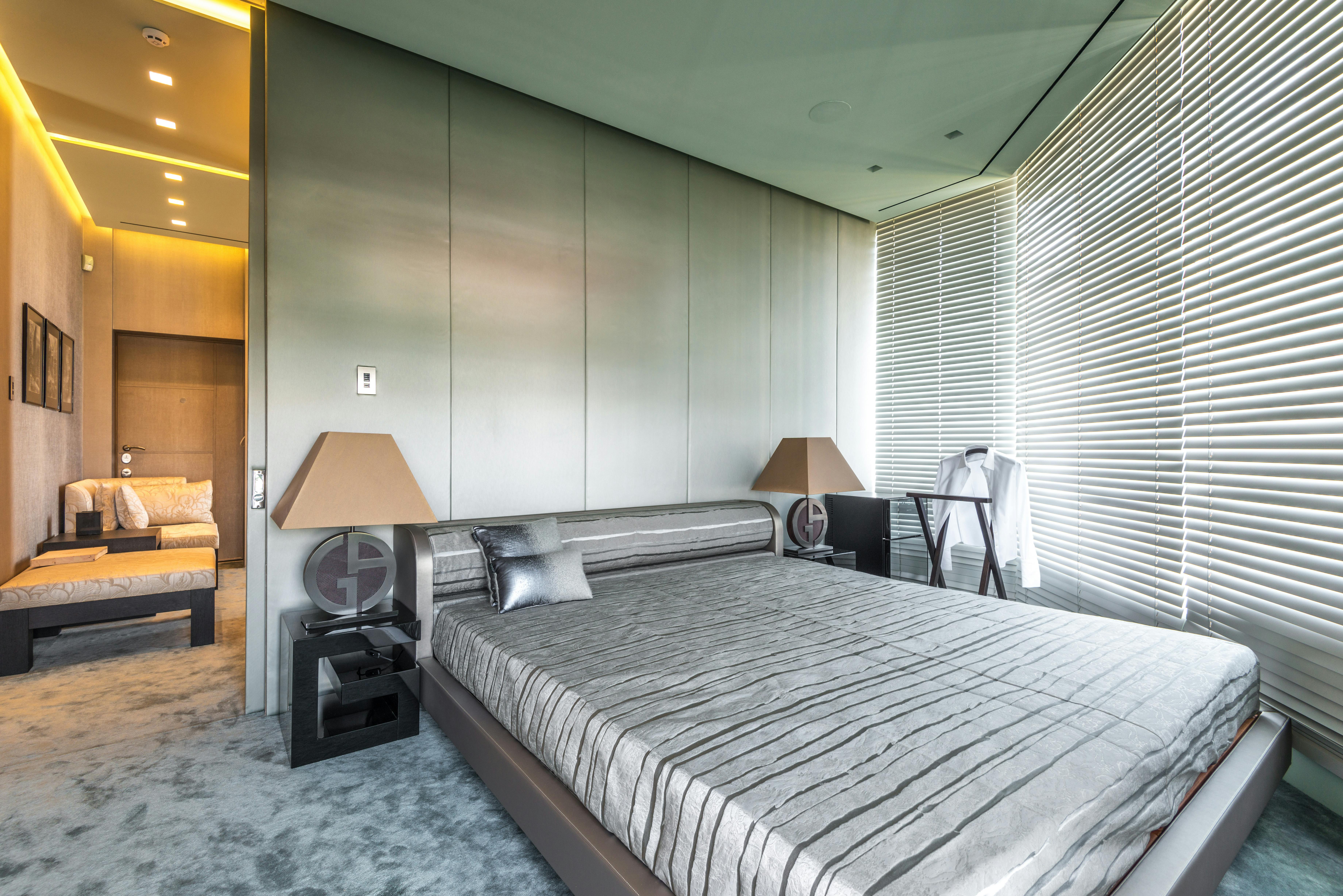
This Photo was taken by Max Vakhtbovych.
Wellness and recreation integration
Contemporary guest wings often include private fitness areas, meditation spaces, or spa-like bathroom facilities that rival commercial wellness centers. These amenities recognize that modern travelers prioritize health and wellness maintenance during their stays.
Integration with private fitness studio design principles allows guest wings to include professional-grade exercise equipment, yoga spaces, or even compact swimming pools or spa facilities.
Culinary and dining amenities
Many luxury guest wings incorporate sophisticated food service capabilities, from full kitchenettes to professional-grade coffee and beverage stations. Some installations include wine storage and service areas that connect to the home’s main wine cellar systems for seamless hospitality service.
The integration of smart appliances allows for pre-programmed meal preparation, automated beverage service, and even coordination with external catering services for more elaborate dining experiences.
Case study insights from visionary transformations
Recent high-profile guest wing transformations provide valuable insights into successful implementation strategies. A 2025 project in Malibu transformed a 3,000-square-foot guest wing into a comprehensive hospitality suite that incorporates all the elements discussed—smart technology, climate control, and presidential suite aesthetics.
The project team, led by renowned hospitality designer Maria Santos, integrated over 300 smart devices into a seamless ecosystem controlled by a single interface. The system learns guest preferences through behavioral analysis and creates personalized environment profiles that can be instantly recalled for return visits.
According to Architectural Digest’s 2025 luxury home technology report, such comprehensive transformations typically see return on investment through increased property values of 15-25% and enhanced social capital through improved guest experiences.

This Photo was taken by Chích Chòe Design.
Implementation challenges and solutions
The most common challenges in guest wing transformations involve integrating complex technology systems without overwhelming users with complicated controls. Successful projects employ intuitive interface design and comprehensive automation that operates seamlessly in the background.
Budget management becomes critical when incorporating multiple luxury systems. Industry experts recommend prioritizing core comfort systems—climate control, lighting, security—before adding advanced amenities. This approach ensures fundamental functionality while allowing for future upgrades as technology evolves.
Future trends in guest wing technology
Looking toward 2026 and beyond, emerging technologies promise even more sophisticated guest wing capabilities. Artificial intelligence systems are becoming more predictive and personalized, while new materials and construction techniques allow for more seamless technology integration.
The integration of virtual and augmented reality systems will likely become more common, allowing guests to customize their environment visually and experientially. Holographic concierge services and immersive entertainment systems represent the next evolution in luxury hospitality technology.
Sustainability integration
Future guest wing designs increasingly emphasize environmental sustainability alongside luxury amenities. This includes solar integration, greywater recycling systems, and smart energy management that optimizes consumption based on occupancy patterns.
According to the Green Building Advisor’s 2025 luxury market analysis, sustainable luxury features now influence 89% of high-end hospitality design decisions, reflecting growing environmental consciousness among affluent homeowners.
Frequently asked questions
What is the typical cost range for a complete luxury guest wing transformation?
Complete luxury guest wing transformations typically range from $500,000 to $2.5 million, depending on size, technology complexity, and finish quality. This includes architectural modifications, smart technology integration, high-end furnishings, and specialized systems like advanced climate control and security features.
How long does a comprehensive guest wing project typically take to complete?
Most luxury guest wing transformations require 8-14 months from design inception to completion. This timeline includes 2-3 months for design development, 2-4 months for permitting and preparation, and 4-7 months for construction and technology integration. Complex smart systems require additional time for programming and testing.
What smart technology features provide the best return on investment?
Climate control systems, automated lighting, and security integration typically provide the highest satisfaction rates and property value increases. Biometric access controls and predictive environmental management show particularly strong ROI, with guest satisfaction rates exceeding 95% in recent surveys.
Can existing guest spaces be retrofitted with these luxury features?
Yes, many luxury features can be retrofitted into existing spaces, though some limitations may apply depending on structural and electrical infrastructure. Smart technology systems are particularly adaptable to retrofit installation, while major climate control upgrades may require more extensive modifications.
How do these private guest wings compare to luxury hotel experiences?
Well-designed private guest wings often exceed luxury hotel experiences through personalization capabilities, privacy levels, and customization options not possible in commercial settings. The integration of smart technology and biometric learning systems creates uniquely tailored experiences that improve with each guest visit.
What maintenance requirements do these sophisticated systems have?
Comprehensive smart guest wing systems typically require quarterly professional maintenance visits and annual system updates. Most installations include remote monitoring capabilities that allow service providers to address issues proactively. Homeowners should budget approximately 3-5% of the initial system cost annually for maintenance and updates.
Crafting unforgettable hospitality experiences
The transformation of private guest wings into presidential suite-style sanctuaries represents more than just luxury amenity addition—it reflects a fundamental shift toward experiential hospitality that creates lasting memories and strengthens relationships. The integration of smart concierge architecture, personalized climate systems, and sophisticated design creates environments that anticipate and exceed guest expectations in ways commercial hospitality cannot match.
Success in these projects requires careful balance between technological sophistication and human-centered design. The most effective installations feel intuitive and welcoming rather than complex or intimidating. When executed thoughtfully, these spaces become powerful extensions of personal hospitality values, demonstrating care and attention to guest comfort that speaks more eloquently than words.
The investment in luxury guest wing transformation pays dividends beyond property value increases. These spaces become catalysts for deeper personal and professional relationships, venues for meaningful gatherings, and expressions of refined taste that enhance the homeowner’s lifestyle and social connections. As technology continues advancing and guest expectations evolve, the homes that embrace these comprehensive hospitality solutions will set new standards for private luxury living and entertaining excellence.