The children’s room has evolved from a simple sleeping space into a sophisticated learning environment that rivals the most prestigious educational institutions. Today’s discerning parents demand more than colorful walls and toy boxes—they seek transformational spaces that nurture young minds while reflecting their family’s elevated lifestyle standards. The challenge lies in creating environments that seamlessly blend pedagogical excellence with palatial elegance, incorporating cutting-edge technology without overwhelming developing sensibilities. How do visionary designers achieve this delicate balance, transforming ordinary nurseries into royal palace-style learning sanctuaries that grow with children while maintaining the sophisticated aesthetic expected in luxury homes?
The royal nursery revolution: why traditional children’s rooms fail modern families
Traditional children’s room design operates on outdated assumptions about how young minds develop and learn. Most conventional nurseries prioritize short-term convenience over long-term educational value, resulting in spaces that children quickly outgrow both functionally and intellectually.
The fundamental flaw in standard nursery design stems from treating children’s spaces as temporary holding areas rather than foundational learning environments. Research from the American Montessori Society demonstrates that children aged 18 months to 6 years absorb environmental cues at an extraordinary rate, making their physical surroundings critical to cognitive development.
Luxury families investing millions in their primary residences cannot afford to compromise on spaces where their children spend 8-12 hours daily. The disconnect between sophisticated adult spaces and basic children’s rooms creates an jarring aesthetic gap that undermines the home’s overall design integrity.

This Photo was taken by Pavel Danilyuk.
Contemporary parents recognize that children’s cognitive development benefits significantly from exposure to beauty, order, and sophisticated design principles from birth. This understanding drives demand for nursery transformations that maintain luxury aesthetic standards while incorporating evidence-based educational architecture.
Decoding Montessori-inspired educational architecture for luxury living
Montessori educational philosophy emphasizes prepared environments that encourage independent exploration and natural learning progression. When applied to luxury nursery design, these principles create spaces that function as private tutoring sanctuaries within the family residence.
Child-scale luxury: proportional design principles
The cornerstone of Montessori-inspired luxury nurseries lies in creating child-proportioned environments using premium materials and sophisticated craftsmanship. Custom millwork specialists craft miniature furniture pieces from the same exotic hardwoods used throughout luxury homes, ensuring aesthetic continuity while meeting developmental needs.
Low-profile shelving units constructed from hand-selected walnut or cherry wood display carefully curated learning materials at child-accessible heights. These pieces incorporate soft-close mechanisms and rounded edges finished with food-safe, non-toxic sealers that meet both safety standards and luxury expectations.
Prepared environment zones for different learning activities
Luxury Montessori nurseries divide space into distinct learning zones, each designed for specific developmental activities while maintaining visual harmony throughout the room. The practical life area features child-sized versions of luxury kitchen elements, including marble-topped preparation surfaces and brass fixtures that mirror the home’s luxury kitchen design.
| Learning Zone | Square Footage | Key Features | Premium Materials |
|---|---|---|---|
| Practical Life | 40-60 sq ft | Child kitchen, cleaning station | Carrara marble, brass fixtures |
| Sensorial | 30-45 sq ft | Texture exploration, sound materials | Natural stone, hardwood blocks |
| Language | 25-35 sq ft | Reading nook, writing surface | Leather-bound books, silk cushions |
| Mathematics | 35-50 sq ft | Counting materials, geometric shapes | Polished brass beads, mahogany trays |
The sensorial learning area showcases natural materials that engage developing senses while maintaining the sophisticated palette expected in luxury interiors. Hand-carved wooden geometric solids crafted from premium hardwoods provide tactile learning experiences that children can safely mouth during exploration phases.
Smart growth-adaptive environment systems: technology meets timeless design
The most innovative luxury nursery transformations incorporate intelligent systems that adapt physical environments to support children’s changing developmental needs without requiring major renovations.
Automated furniture adjustment systems
Cutting-edge nursery designs feature motorized furniture systems that adjust heights and configurations as children grow. Premium desk surfaces rise incrementally over time, maintaining proper ergonomic relationships while preserving the room’s sophisticated aesthetic.
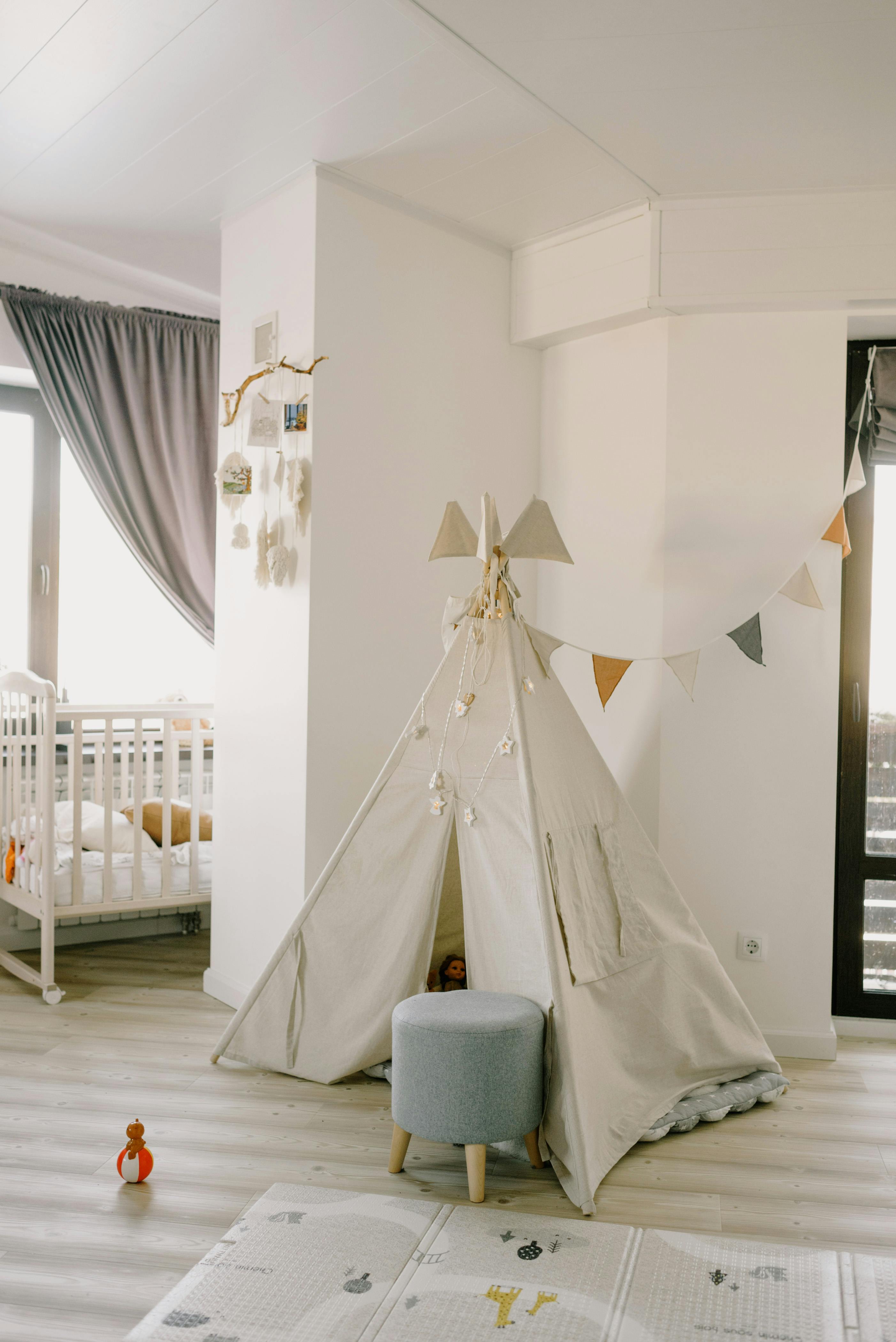
This Photo was taken by Ksenia Chernaya.
These systems integrate seamlessly with home automation platforms, allowing parents to schedule adjustments during natural growth periods. The technology remains completely hidden within custom millwork, preserving clean design lines while providing unprecedented functionality.
Climate-controlled learning material storage
Luxury nurseries incorporate museum-quality storage systems that preserve expensive educational materials while maintaining optimal presentation. Climate-controlled display cases protect investment-grade learning tools from humidity fluctuations and UV damage while showcasing them like precious artifacts.
Similar to wine cellars that protect valuable collections, nursery storage systems maintain precise temperature and humidity levels that preserve wooden materials and prevent warping. These systems often connect to the home’s central climate management, ensuring consistent environmental conditions that support both material preservation and child comfort.
Royal palace-style design elements that inspire young minds
The most successful luxury nursery transformations borrow architectural elements from historical palaces and royal residences, scaled appropriately for young occupants while maintaining grandeur that inspires rather than intimidates.
Coffered ceiling treatments and crown molding details
Skilled craftsmen create simplified versions of classical ceiling treatments using lightweight materials that maintain visual impact without overwhelming small spaces. Hand-painted coffers feature soft pastel interpretations of traditional palace color schemes, creating sophisticated environments that stimulate visual development.
Crown molding profiles mirror those used throughout luxury homes but incorporate safety modifications like rounded edges and smooth transitions. These details create architectural continuity that helps children feel integrated into the home’s overall design narrative rather than segregated in obviously different spaces.
Natural light optimization and crystal chandelier integration
Natural light plays a crucial role in supporting healthy circadian rhythm development and creating the bright, airy feeling associated with palace interiors. Luxury nurseries feature motorized window treatments that automatically adjust throughout the day, optimizing light levels for different activities while maintaining privacy.

This Photo was taken by Pavel Danilyuk.
Crystal chandeliers designed specifically for children’s spaces incorporate safety features while providing the sparkling light quality that creates magical atmospheres. These fixtures often feature adjustable brightness levels that support various activities from quiet reading to active play.
Just as luxury homes feature sophisticated lighting plans in areas like the private library, nurseries require layered lighting approaches that support both functional needs and atmospheric requirements.
Integrating safety without compromising luxury aesthetics
The greatest challenge in luxury nursery design involves implementing comprehensive safety measures that remain invisible to casual observation while meeting the stringent standards expected in high-end residential projects.
Hidden safety systems and childproofing integration
Advanced nursery designs incorporate safety features directly into architectural elements rather than adding obvious aftermarket solutions. Electrical outlets disappear behind sliding panels that blend seamlessly with wall treatments, while magnetic cabinet locks operate invisibly within custom millwork.
Window safety systems integrate with automated treatments, preventing unsafe opening while maintaining the clean lines expected in luxury interiors. These systems monitor window positions continuously, automatically restricting openings when children are present while allowing full operation during cleaning and maintenance.
Non-toxic luxury material selection
Luxury nursery projects require extensive research to identify premium materials that meet safety standards without compromising aesthetic goals. Natural materials like solid hardwoods finished with plant-based sealers provide the sophisticated appearance expected in high-end homes while ensuring complete safety for developing children.
According to data from the GREENGUARD Environmental Institute, luxury nurseries increasingly specify low-emission materials that maintain indoor air quality standards while providing the visual richness expected in premium residential spaces.
Technology integration for educational enhancement
The most sophisticated nursery transformations integrate educational technology that enhances learning without creating screen dependency or overwhelming developing minds with digital stimulation.
Interactive learning surfaces and projection systems
Advanced nurseries feature interactive floor and wall surfaces that respond to touch and movement, creating educational games that encourage physical activity while building cognitive skills. These systems project images and respond to interaction while remaining completely hidden when not in use.
Projection technology allows walls to transform into educational landscapes, art galleries, or calming natural scenes depending on learning objectives and time of day. The systems integrate with smart home platforms, automatically adjusting content based on scheduled activities and developmental milestones.

This Photo was taken by Max Vakhtbovych.
Sound system design for language development
High-quality audio systems designed specifically for language development provide immersive experiences that support multilingual learning and music appreciation. These systems feature precisely calibrated speakers that deliver age-appropriate volume levels while maintaining the acoustic clarity expected in luxury environments.
Similar to the sophisticated audio planning found in luxury home theaters, nursery sound systems require expert acoustic design that accounts for developing hearing sensitivity while providing rich, engaging audio experiences.
Case study: transforming a 400-square-foot space into a royal learning sanctuary
A recent project in Manhattan’s Upper East Side demonstrates how visionary designers transformed a standard bedroom into a palace-inspired learning sanctuary that accommodates children from infancy through elementary school age.
The challenge: multi-functional space requirements
The client family required a space that could function as a nursery for their infant daughter while anticipating the educational needs of their 4-year-old son. The room needed to maintain the home’s sophisticated aesthetic while providing separate learning zones for different developmental stages.
Space constraints demanded creative solutions that maximized functionality without creating visual clutter. The existing room featured 10-foot ceilings and large windows facing Central Park, providing excellent natural light but requiring careful planning to optimize the compact footprint.
The solution: layered learning environments
The design team created distinct zones using subtle level changes and custom millwork that defined areas without walls or barriers. A raised platform area accommodates the Montessori work space for the older child, while floor-level areas provide safe exploration space for the infant.
Custom storage solutions hide away materials appropriate for different ages, allowing the space to transform based on who is using it at any given time. Automated systems adjust lighting, temperature, and even scent diffusion to create optimal environments for different activities.
The growing demand for luxury educational environments
Market data reveals significant growth in luxury nursery renovations as parents increasingly recognize the connection between environmental quality and child development outcomes.
According to Houzz’s 2025 Luxury Home Trends Report, children’s space renovations increased 34% among households with incomes above $500,000, with average project costs ranging from $75,000 to $200,000 for complete transformations.
| Investment Level | Typical Budget Range | Key Features Included | Project Timeline |
|---|---|---|---|
| Premium | $75,000 – $125,000 | Custom millwork, smart systems | 8-12 weeks |
| Ultra-luxury | $125,000 – $200,000 | Automated furniture, climate control | 12-16 weeks |
| Bespoke | $200,000+ | Full architectural integration | 16-24 weeks |
This growth reflects increasing awareness among affluent families that early childhood environments significantly impact long-term educational outcomes and social development.
Working with visionary designers: what to expect
Successful luxury nursery projects require collaboration with specialists who understand both child development principles and luxury residential design standards.
The design process timeline
Premium nursery transformations typically require 4-6 months from initial consultation to completion, with extensive planning phases that ensure every detail supports both educational objectives and aesthetic goals.
The process begins with developmental consultations that assess current and projected needs, followed by architectural planning that integrates safety, functionality, and beauty. Material selection requires weeks of research to identify products that meet both luxury standards and safety requirements.
Just as executive office transformations require careful planning to optimize productivity, nursery projects demand meticulous attention to how design elements support developmental goals.
Investment considerations and long-term value
High-quality nursery transformations provide value that extends far beyond childhood years. Adaptive systems allow spaces to evolve into sophisticated study areas, art studios, or guest accommodations as children mature and family needs change.
Premium materials and construction techniques ensure longevity that justifies initial investment while maintaining the sophisticated aesthetic that preserves home values in luxury markets.
Future trends shaping luxury nursery design in 2026
Emerging trends in luxury nursery design focus on sustainability, wellness optimization, and seamless technology integration that supports natural development rather than replacing human interaction.
Biophilic design integration
Advanced nursery designs increasingly incorporate living elements that connect children with nature while maintaining controlled indoor environments. Living walls featuring age-appropriate plants provide air purification while teaching responsibility and observation skills.
Water features designed for safety provide calming sounds while supporting sensory development. These elements require sophisticated engineering to ensure safety while maintaining the luxury aesthetic expected in high-end homes.
The trend toward biophilic elements mirrors developments in other luxury spaces like glass conservatories, where nature integration creates restorative environments for all ages.
Wellness monitoring and optimization
Future nursery designs will incorporate invisible monitoring systems that track air quality, sleep patterns, and activity levels to optimize environmental conditions for healthy development. These systems provide parents with valuable insights while maintaining privacy and avoiding intrusive technology.
Air purification systems designed specifically for children’s spaces will become standard features, utilizing advanced filtration technology that removes pollutants while maintaining optimal humidity and oxygen levels.
Frequently asked questions
What is the typical timeline for a luxury nursery transformation?
Complete luxury nursery transformations typically require 4-6 months from initial design consultation to final installation. This timeline includes 6-8 weeks for design development, 2-3 weeks for material procurement, and 8-12 weeks for construction and installation. Complex projects requiring custom millwork or technology integration may extend to 8 months.
How do smart growth-adaptive systems actually work in practice?
Growth-adaptive systems use motorized mechanisms hidden within furniture pieces that automatically adjust heights and configurations based on programmed schedules or manual controls. Desk surfaces can rise 6-12 inches over several years, while storage systems reconfigure to accommodate changing material sizes. These systems integrate with home automation platforms for seamless operation.
What safety certifications should luxury nursery materials meet?
All nursery materials should meet GREENGUARD Gold certification for low chemical emissions, JPMA safety standards for furniture, and CPSC requirements for children’s products. Luxury projects often exceed these standards, specifying materials with additional certifications like Cradle to Cradle for sustainability and Forest Stewardship Council approval for wood products.
Can existing children’s rooms be retrofitted with these advanced systems?
Most existing children’s rooms can accommodate luxury transformation elements, though electrical and structural upgrades may be necessary for advanced technology integration. Rooms with adequate ceiling height (minimum 9 feet) and proper load-bearing capacity can support automated systems and climate control integration without major structural modifications.
How do luxury nursery investments impact home resale value?
Well-designed luxury nurseries that can transition to other uses typically recover 60-75% of investment costs in resale value. Spaces designed with high-quality materials and flexible systems that adapt to adult uses provide better returns than highly specialized configurations that only function as children’s rooms.
What maintenance requirements do smart nursery systems have?
Smart nursery systems require annual professional maintenance similar to other luxury home systems. Automated furniture mechanisms need lubrication and calibration every 12-18 months, while climate control systems require filter changes every 3-6 months. Most systems include remote monitoring capabilities that alert homeowners to maintenance needs before problems occur.
Building foundations for lifelong learning and luxury living
The transformation of children’s spaces from basic nurseries into sophisticated learning sanctuaries represents a fundamental shift in how luxury families approach child development and home design integration. These royal palace-style environments demonstrate that educational excellence and aesthetic sophistication can coexist beautifully when guided by expert design vision and supported by cutting-edge technology.
The investment in premium nursery transformations extends far beyond immediate family benefits, creating spaces that adapt and evolve while maintaining the sophisticated standards expected in luxury residences. As children grow within these carefully crafted environments, they develop appreciation for beauty, order, and excellence that shapes their lifelong relationship with their surroundings.
The most successful projects seamlessly integrate Montessori-inspired educational principles with the technological capabilities and material quality that define contemporary luxury living. Like other premium home transformations such as luxury master bedroom sanctuaries or private spa retreats, these nursery transformations require visionary design thinking that balances immediate needs with long-term value creation.
The future of luxury nursery design lies in creating environments that inspire rather than overwhelm, educate rather than entertain, and adapt rather than become obsolete. These principles guide the most successful transformations, resulting in spaces that serve as foundations for lifelong learning while maintaining the refined aesthetic standards that define truly exceptional homes.